Go to Blogger edit html and find these sentences.Now replace these sentences with your own descriptions.This theme is Bloggerized by Lasantha Bandara - Premiumbloggertemplates.com.
Go to Blogger edit html and find these sentences.Now replace these sentences with your own descriptions.This theme is Bloggerized by Lasantha Bandara - Premiumbloggertemplates.com.
Go to Blogger edit html and find these sentences.Now replace these sentences with your own descriptions.This theme is Bloggerized by Lasantha Bandara - Premiumbloggertemplates.com.
Go to Blogger edit html and find these sentences.Now replace these sentences with your own descriptions.This theme is Bloggerized by Lasantha Bandara - Premiumbloggertemplates.com.
Go to Blogger edit html and find these sentences.Now replace these sentences with your own descriptions.This theme is Bloggerized by Lasantha Bandara - Premiumbloggertemplates.com.
This article originally appeared on Bike.com and was republished with permission.
Not everyone has an extensive network of trails in their hometown. In fact, some people don’t have any trails at all. And while traveling to find trails is what most riders resort to, others decide to grab a shovel and get to work.
A prime of example is Corbin Selfe. Growing up in the small town of Sicamous, British Columbia––located about halfway between Calgary and Vancouver––Selfe soon realized that if he wanted to ride, he needed to build.
So that’s exactly what he did, building a network of trails and jumps over the course of several years. The result is a picturesque riding area that is primed for shredding, and as you can see, that’s exactly what Selfe does.
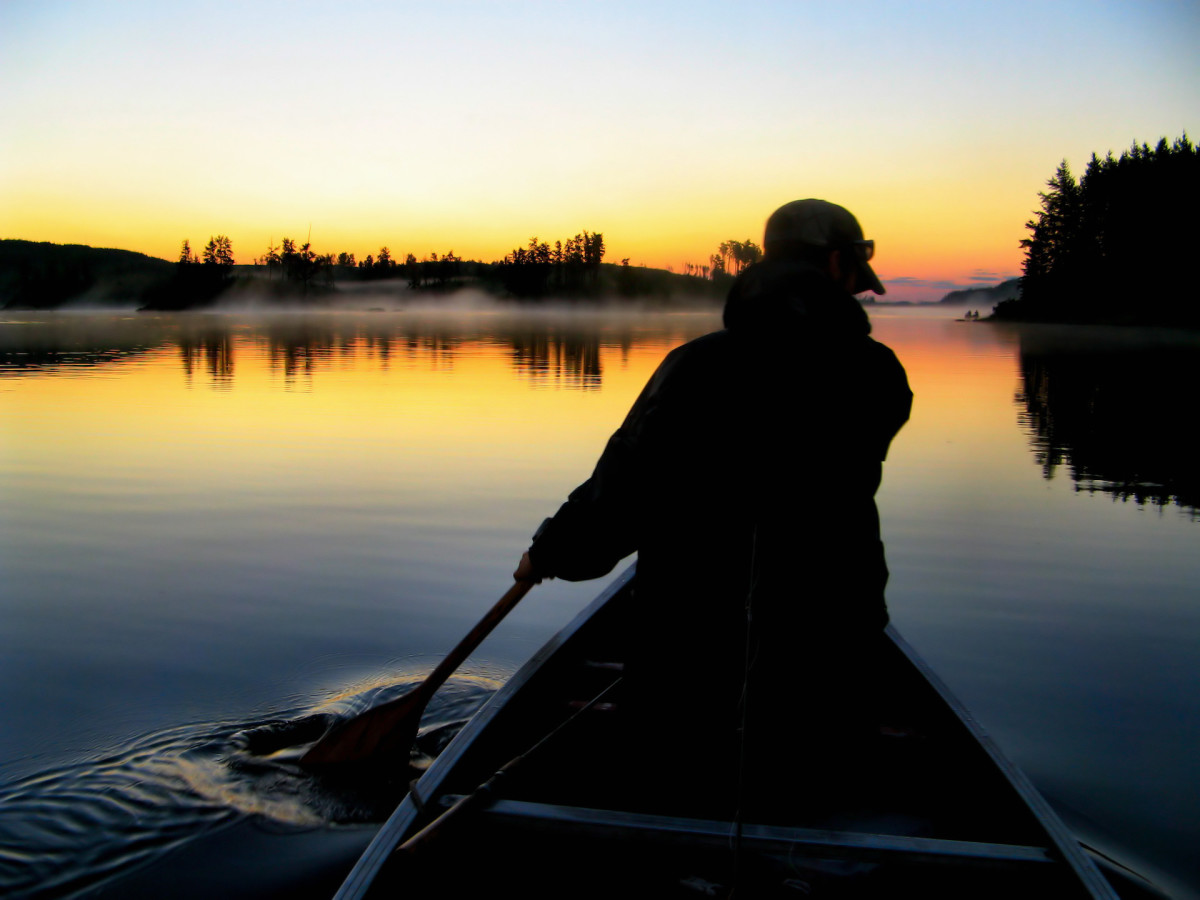
Ely, Minnesota was once a thriving iron mining capital, whose modern identity is now synonymous with the largest wilderness area east of the Rocky Mountains: the Boundary Waters Canoe Area Wilderness. That wilderness (the most heavily used in the U.S., attracting a quarter million visitors a year) now finds itself at odds with a foreign-owned copper/nickel mine—one that had been suspended, pending further research under the previous administration, and is now being fast-tracked by the current one.
Travis J. Camp / Shutterstock
The massive underground project underway just a couple miles (or a long portage) away from the wilderness boundary, promises to bring jobs back to the economically depressed Iron Range, but simultaneously threatens to permanently taint this 1.1 million-acre network of intact boreal forest and pristine lakes, bogs, and streams for generations to come. The risk of toxic sulfide runoff from the tailings and waste rock entering the intricate and interconnected hydrology of this region is seen by many experts as inevitable; the heavy metal- and acid-laced consequences remaining in the water and land for centuries.
These two competing histories, resource extraction and wilderness conservation, have overlapped since the early 1900s and have reached a new level of tension. On one hand, this region sorely needs a boost in its economy to sustain communities like Ely, which one could argue will contribute to furthering its wilderness adventure industry. But on the other hand, a future Superfund site, where the Boundary Waters once was, is hardly the job generator anyone wants. The long-term environmental damage risks dashing all manner of future economic hopes against the copper-rich rocks below. And so, the fate of Ely and the Boundary Waters doesn’t need to be at the whim of a Chilean-Canadian multinational mining conglomerate; choice lies in the hands of American voters at local, state, and national levels.
These tough choices between economic gains and environmental stability are playing out in small rural towns all across the country.
And accordingly, conservation of our ever-shrinking wild and scenic lands tends to create polarizing stances: locals against visitors; industry against ecosystems; environmentalists against capitalists. But many Americans believe in the value of public lands and wild spaces. Most support sustaining these places for future generations. After all, the miners from the Iron Range hunt, fish, and paddle the same waterways as the lawyers from Minneapolis. Of course, we humans will continue to need to extract natural resources from the earth. How we balance these two needs is what’s actually up for debate (and on the ballot), which unfortunately, through blind partisanship, often muddies the waters of what’s actually at stake: rare public, wild lands.
We need to work together, listen to all stakeholders, and seek to truly understand the real consequences of our decisions that will affect our fellow citizens and our collectively owned landscapes for generations. Protecting wilderness for all people to use is one of the great American traditions. And while we may disagree on how to preserve, use, and live among these singular and limited wild places, let’s not pretend for a moment that the importance of these wild public places is up for debate. Luckily, we have another great American tradition coming up on Tuesday: a free election where your VOTE counts!
Every 1 point increase in the effort to discredit vaccines is linked to an average 2% drop in annual vaccine coverage around the world, and a 15% increase in negative tweets about vaccination, researchers found.
from WebMD Healthhttps://img.webmd.com/dtmcms/live/webmd/consumer_assets/site_images/article_thumbnails/news/2012/07_2012/h1n1_vaccine_adverse_outcome/1800x1200_h1n1_vaccine_adverse_outcome.jpg https://ift.tt/2HI8ETU
via IFTTT
Because a high percentage of them have no symptoms when they are infected, they could become sources of future spread, the researchers said.
from WebMD Healthhttps://img.webmd.com/dtmcms/live/webmd/consumer_assets/site_images/article_thumbnails/video/things_that_help_your_thyroid_video/650x350_things_that_help_your_thyroid_video.jpg https://ift.tt/35MxUAh
via IFTTT
Don’t let the odd name deter you: Animal flow offers unique benefits you won’t get from traditional strength training. “It fundamentally brings you back to the basics,” says Nike Master Trainer Patrick Frost. “These are ground-based movements, where you create resistance by pushing and pulling your body around a fixed platform.” The trick to mastering this discipline is generating constant tension throughout your body. “There are some parts that require grace and some that require grit,” Frost says.
“You could do this same workout multiple times and have a completely different experience depending on how you attack it.” While mimicking the movement patterns of a crab or an ape can seem a little goofy, animal flow workouts will challenge your strength, endurance, balance, and mobility all at once. Over time, you’ll develop better proprioception and move with greater intention, which will make your workouts more efficient and effective, and leave you feeling like an apex predator.
Warm up, then perform 3 rounds of each exercise, following the prescribed work and rest periods. These moves require a lot of wrist extension and endurance to sustain proper form, so take a break as needed when starting out. Add this workout to your program 1-2 times a week and slowly build up to 3-4 times. You can also use some of these sequences as warmups or even finishers to your program.
While these exercises should be fluid, create constant resistance by drilling palms into the ground and exaggerating movements, radiating tension through your limbs.
The Warmup
Dedicate 5 minutes to wrist mobilization: Get on all fours and flip your wrists around,
then lean or rock back and forth. After, work through these exercises for 40 seconds
each. They’ll prep your joints for the main animal flow. Perform 2 rounds.
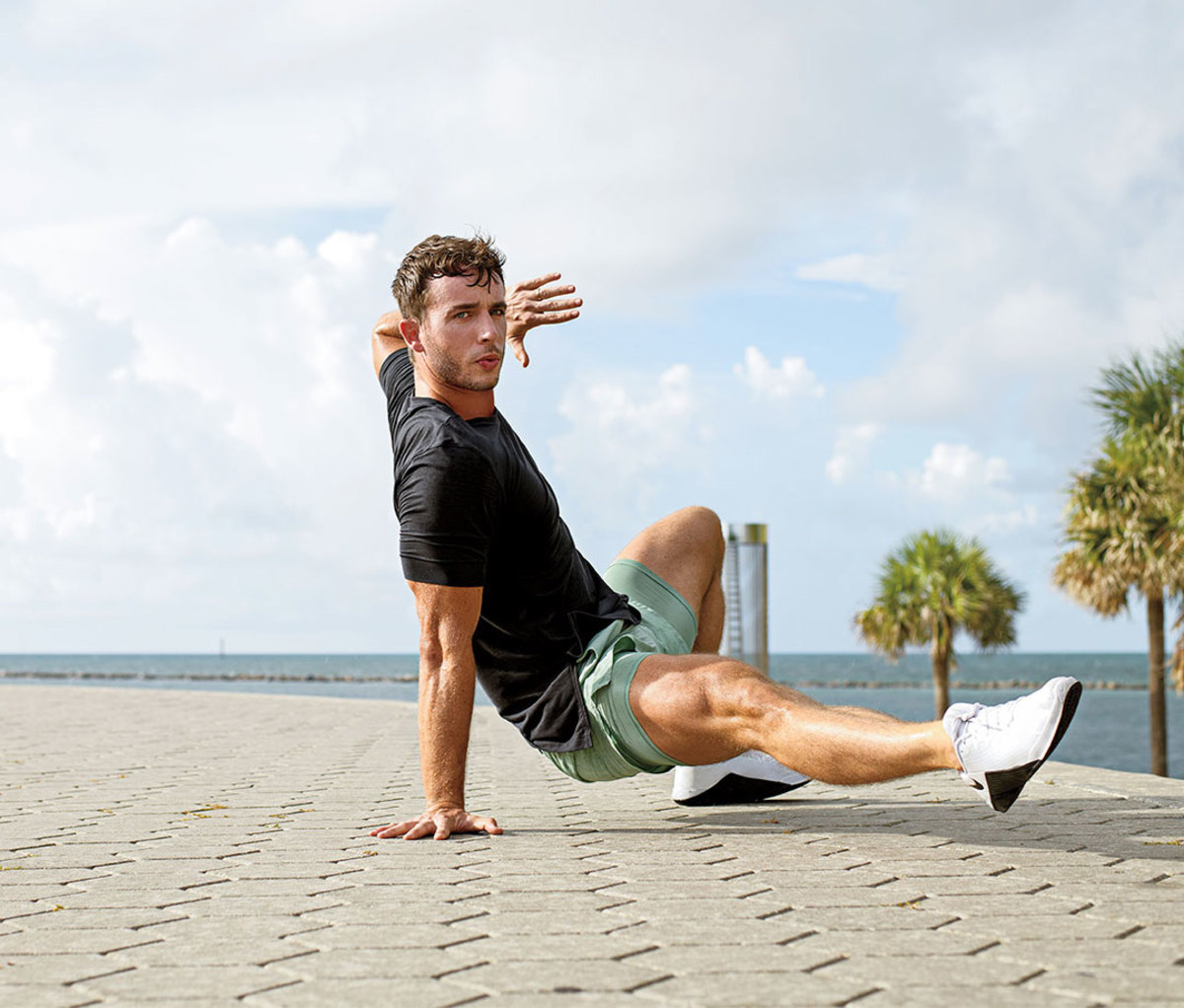
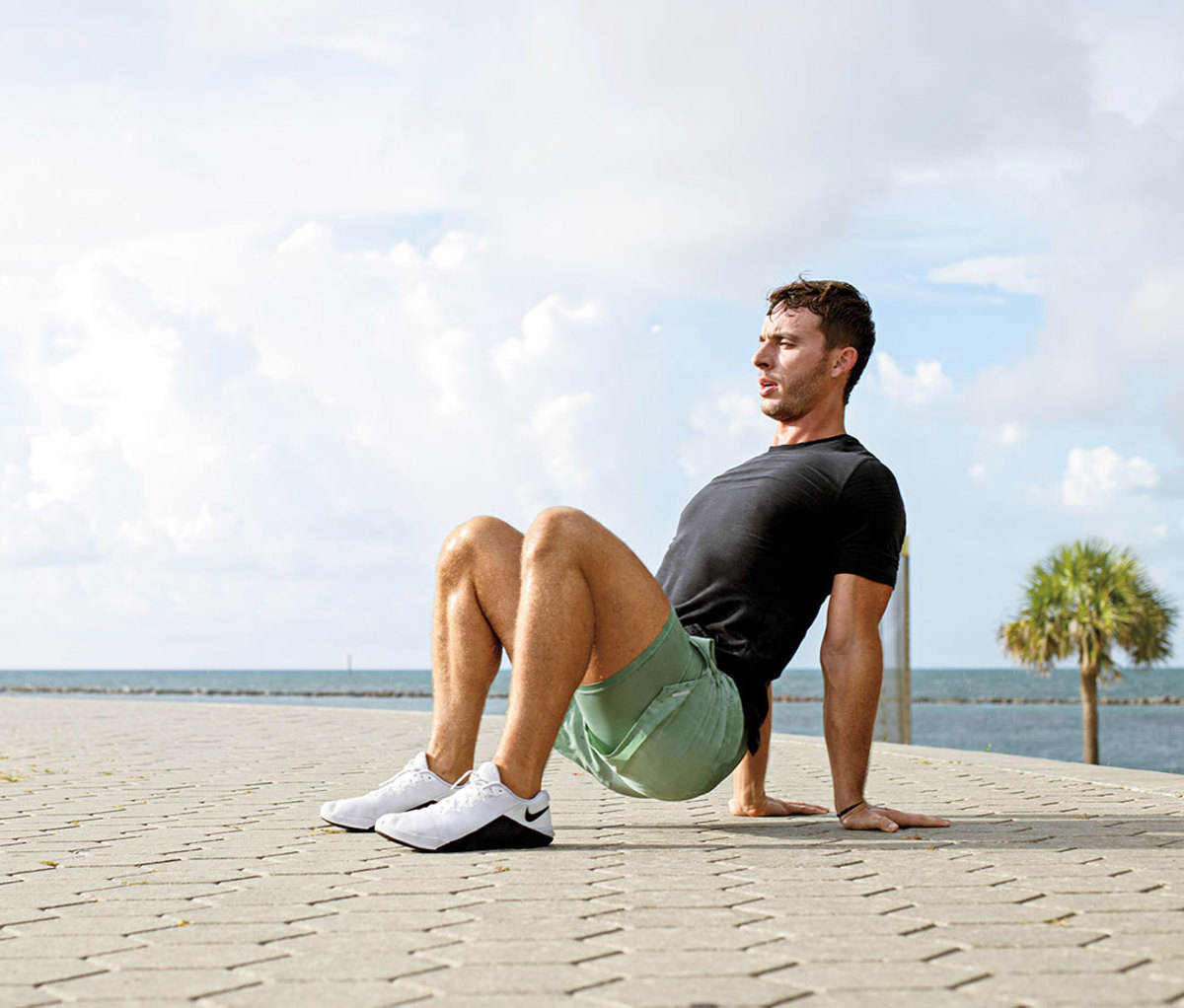
Alternating crab reach (A)James Woodley for Men's Journal
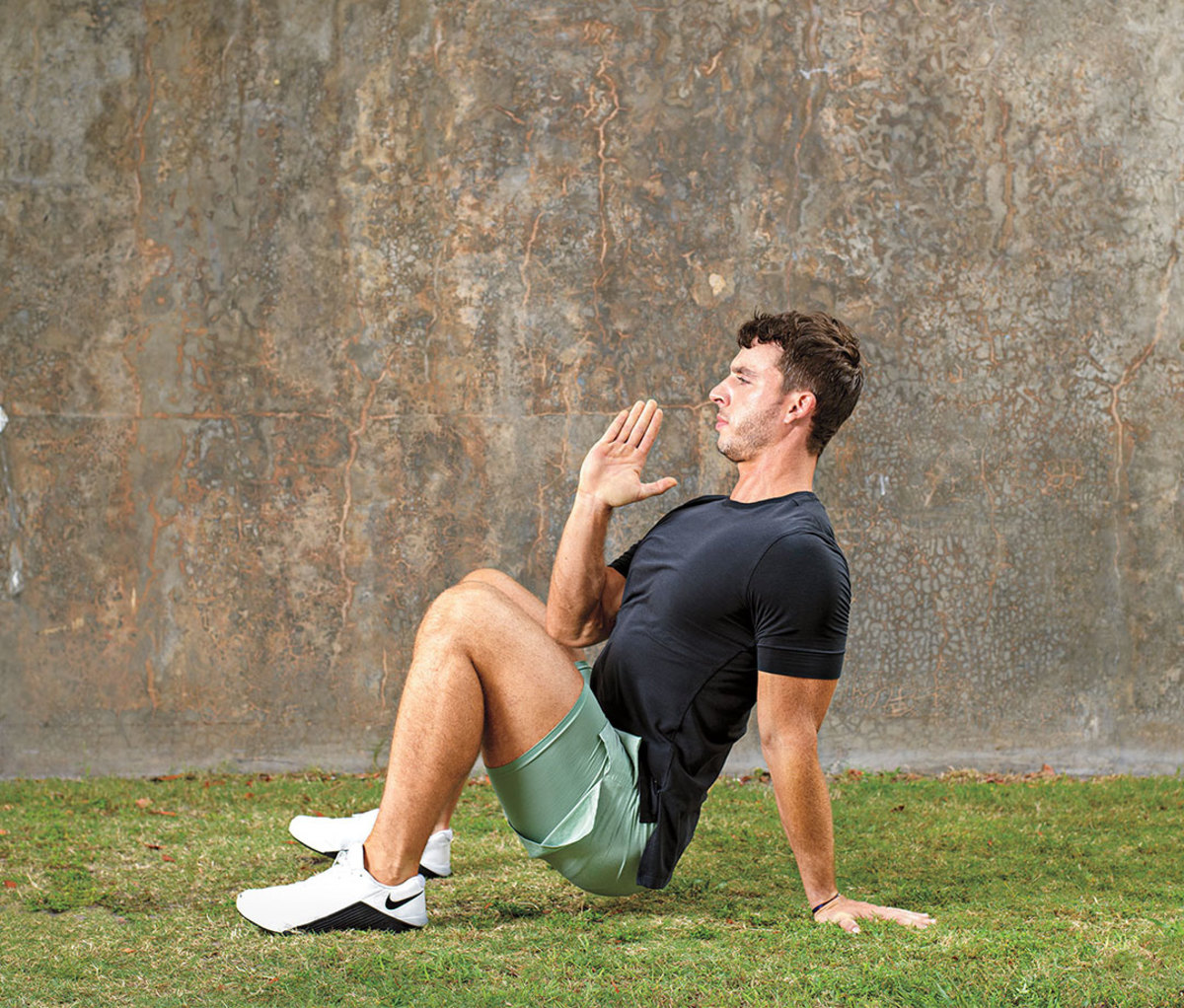
Warmup 1. Alternating Crab Reach
Start in crab position, feet hip-distance apart, hips hovering 1 inch off ground, and arms behind back, fingers pointing away from body. Bend right arm to midline so hand is 6 to 8 inches from face (A).
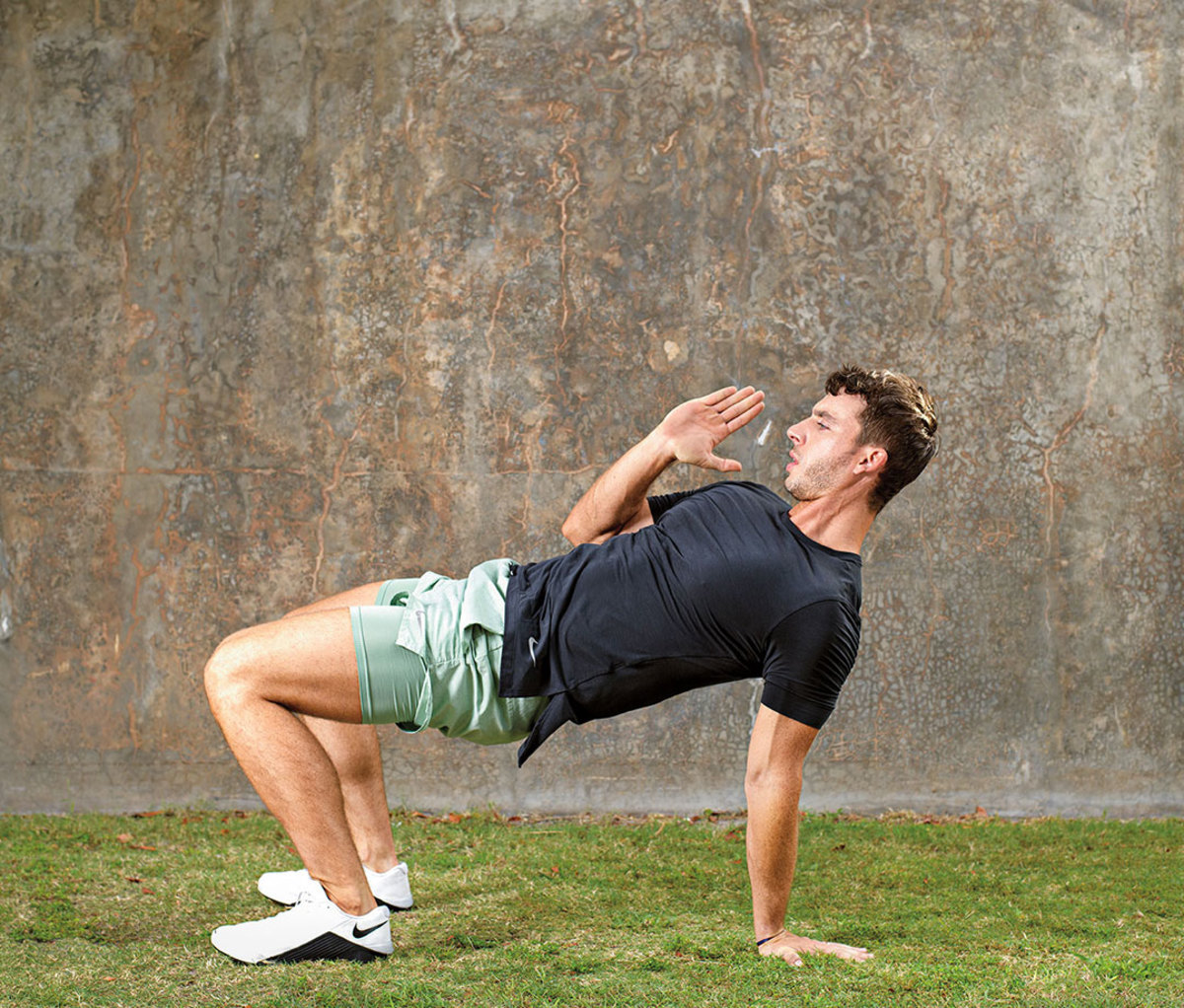
Transition phase of alternating crab reach (B)James Woodley for Men's Journal
Drive through heels and extend hips up into a three-point stance bridge (B).
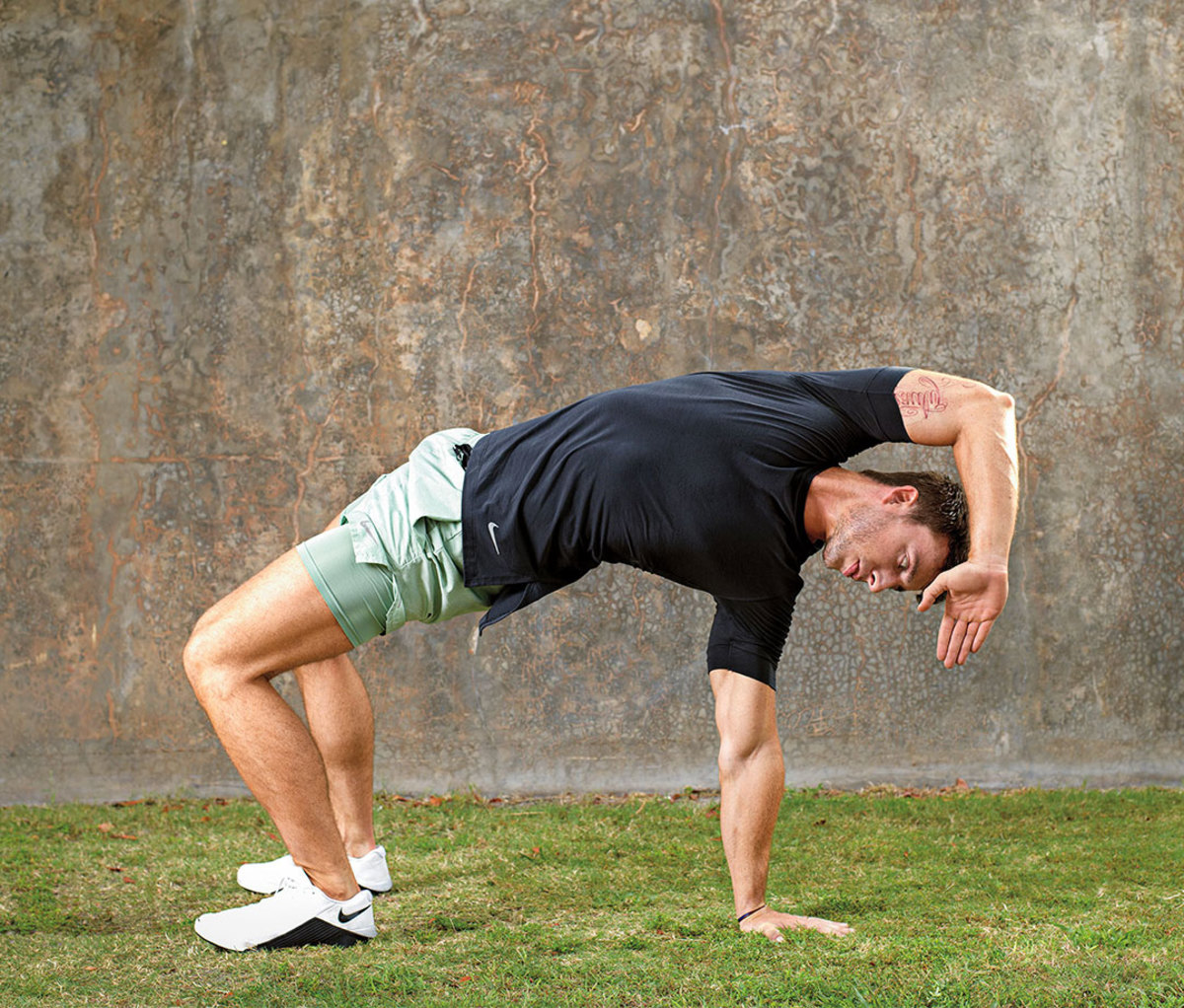
Final stage of alternating crab reach (C)James Woodley for Men's Journal
Reach your arm up and over toward opposite hand, keeping a soft bend in elbow, eyes gazing at static hand (C). Lower, switching sides with each rep.
Beginning phase of Beast Wave Unload (A)James Woodley for Men's Journal
Warmup 2. Beast Wave Unload
Start in loaded beast position on all fours, pushing hips back toward heels as you reach arms forward (A).
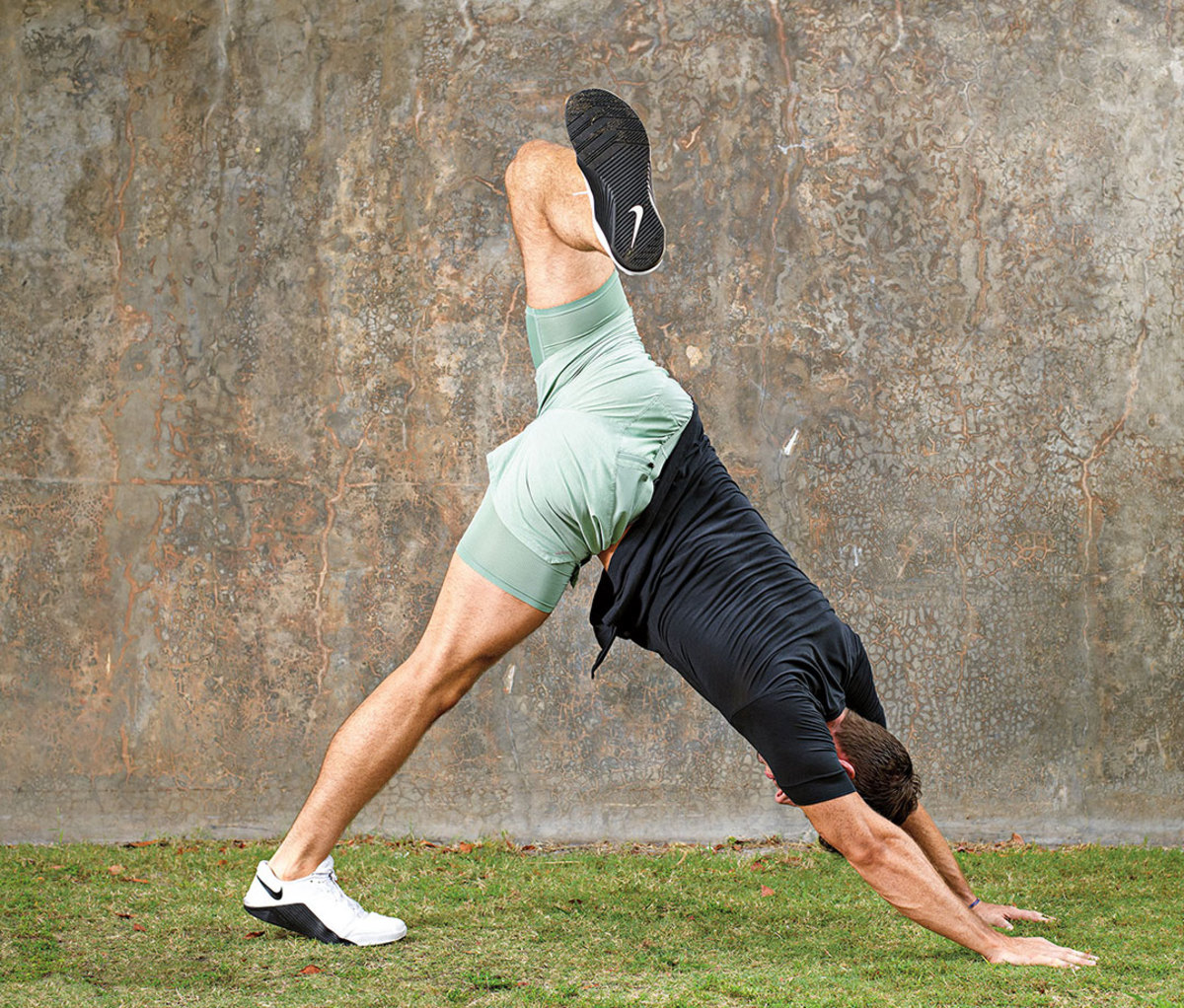
Beast Wave Unload transition phaseJames Woodley for Men's Journal
Hike hips toward ceiling. Once knees are fully extended (B), tuck chin into chest and slowly roll your spine, emphasizing the curve in your back (C). When shoulders pass wrists, come into an upward-facing dog.
Beast Wave Unload transition phase (D)James Woodley for Men's Journal
Open your chest, pull chin to ceiling, and squeeze glutes (D). Reverse the wave and repeat.
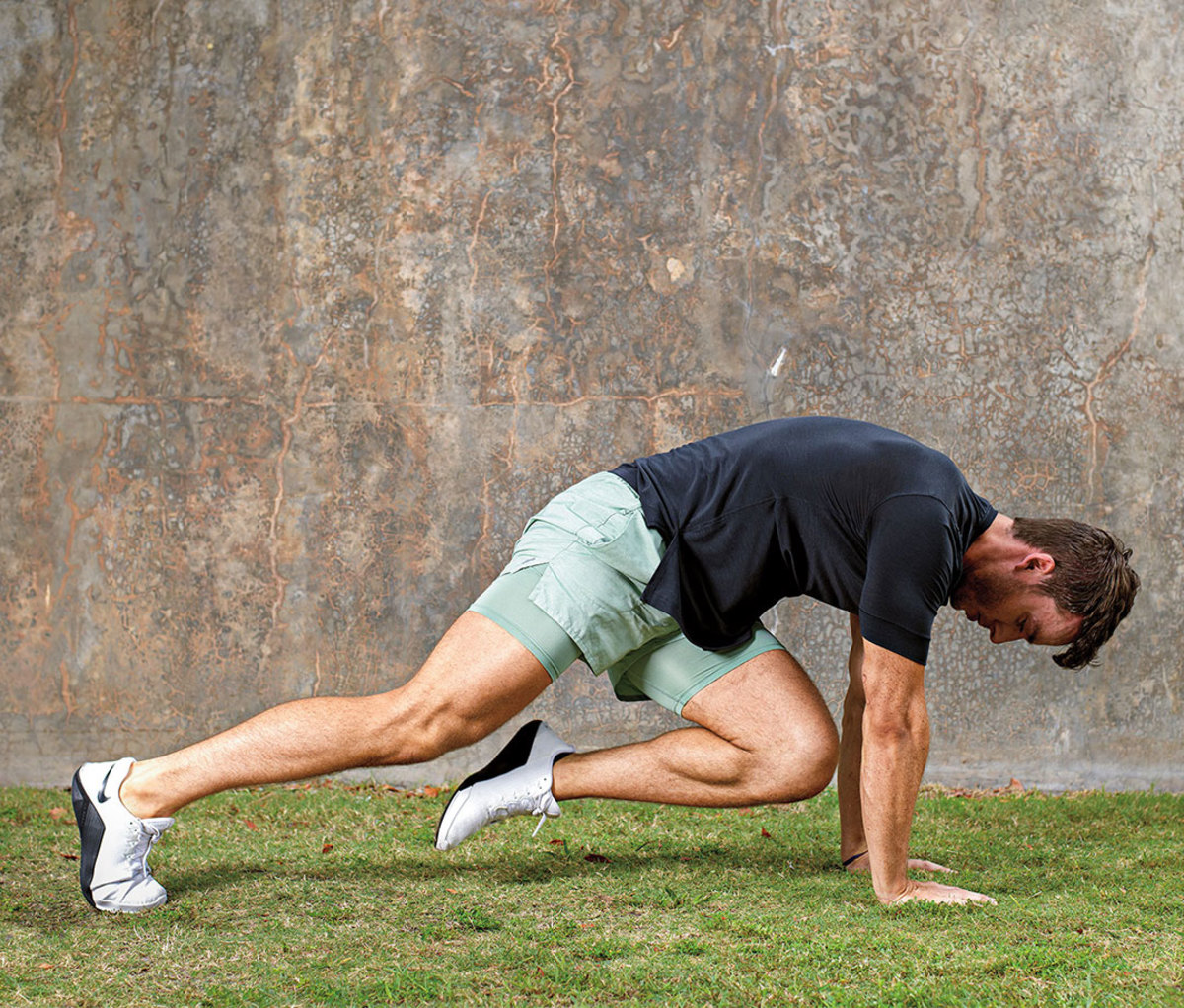
Beginning phase of Alternating Scorpion Reach (A)James Woodley for Men's Journal
Warmup 3. Alternating Scorpion Reach
Start in loaded beast position (A).
Transition phase of Alternating Scorpion Reach (B)James Woodley for Men's Journal
Drive through balls of feet to bring left knee across body toward right wrist, keeping a slight bend in right knee (B).
Final phase of Alternating Scorpion Reach (C)James Woodley for Men's Journal
Extend arms as you drive left leg back, bending the knee and opening your hip, pressing shin toward ceiling (C). Bring left knee across body again before returning to start position, then repeat on opposite side.
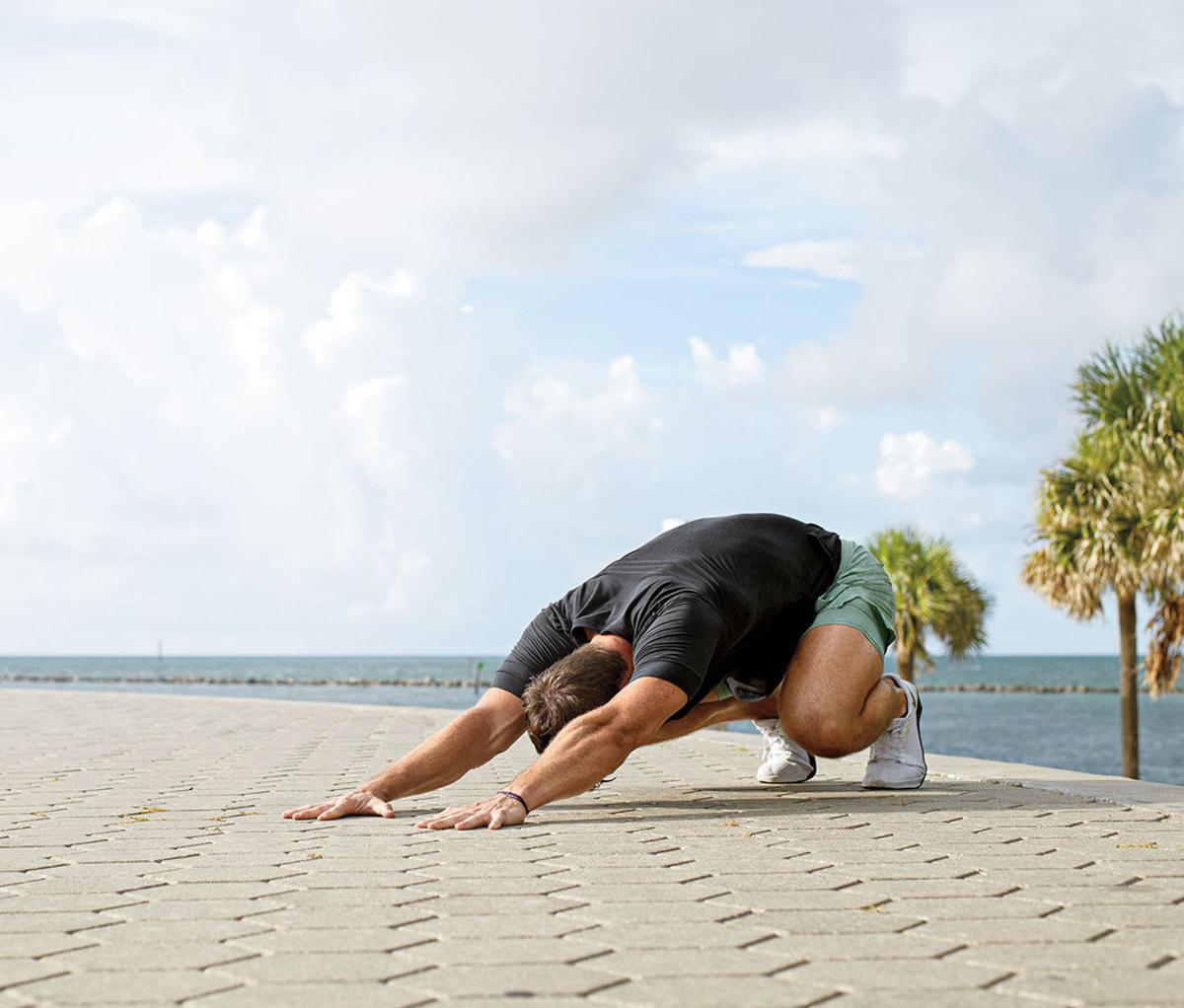
Deep Ape position (A)James Woodley for Men's Journal
Workout 1: Deep Ape to Side Kick Through
Start in a deep squat, with feet hip-width apart or wider for comfort, feet slightly turned out, and arms between knees, keeping a flat back and proud chest (A).
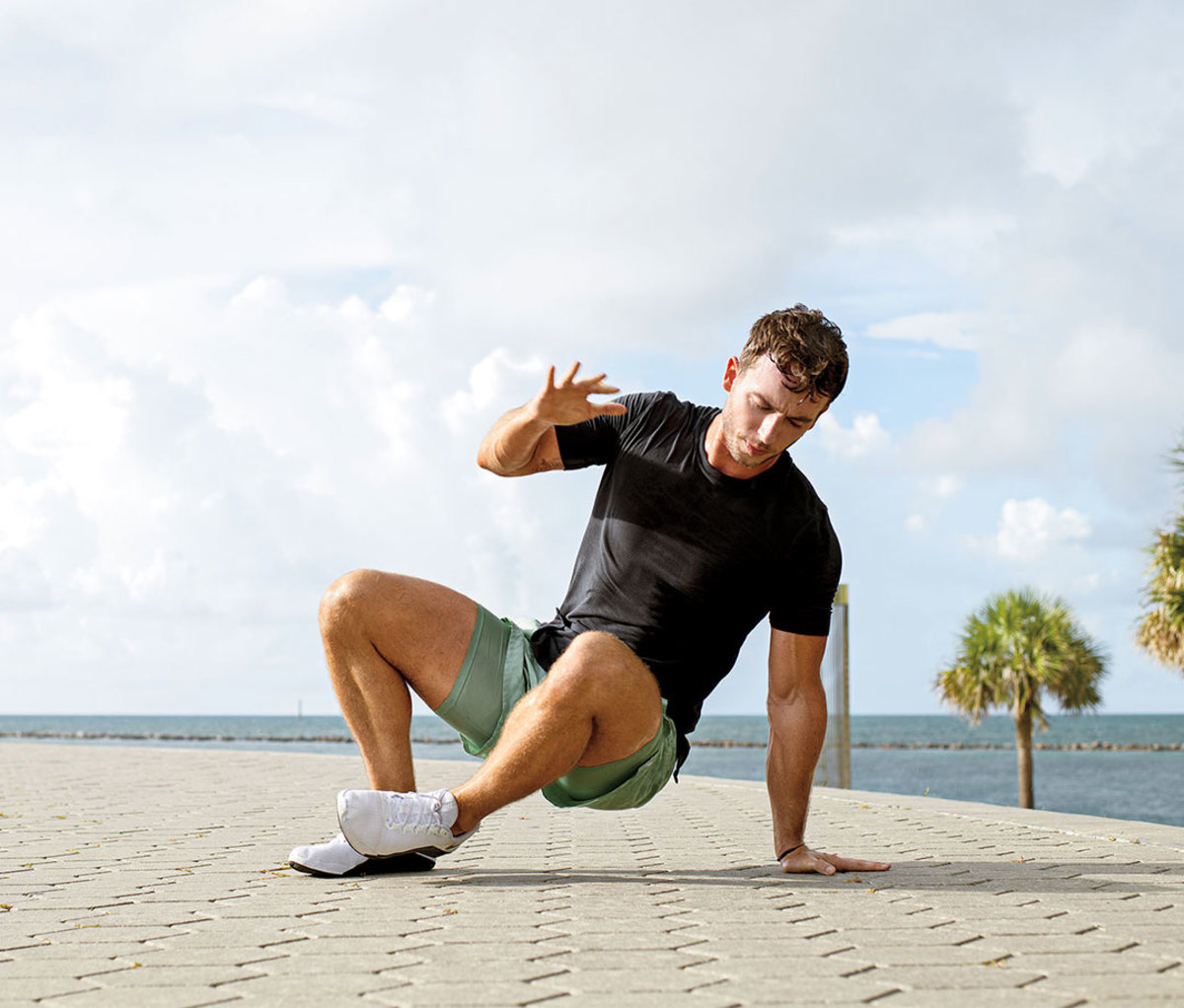
Deep Ape to Side Kick Through transition (B)James Woodley for Men's Journal
Shift weight forward as you plant right hand to the ground (B) and kick right leg through, pointing toe and pulling left elbow back, palm facing away (C).
Side Kick Through (C)James Woodley for Men's Journal
Return to deep ape position, then switch sides. Work 40 seconds on, 20 off.
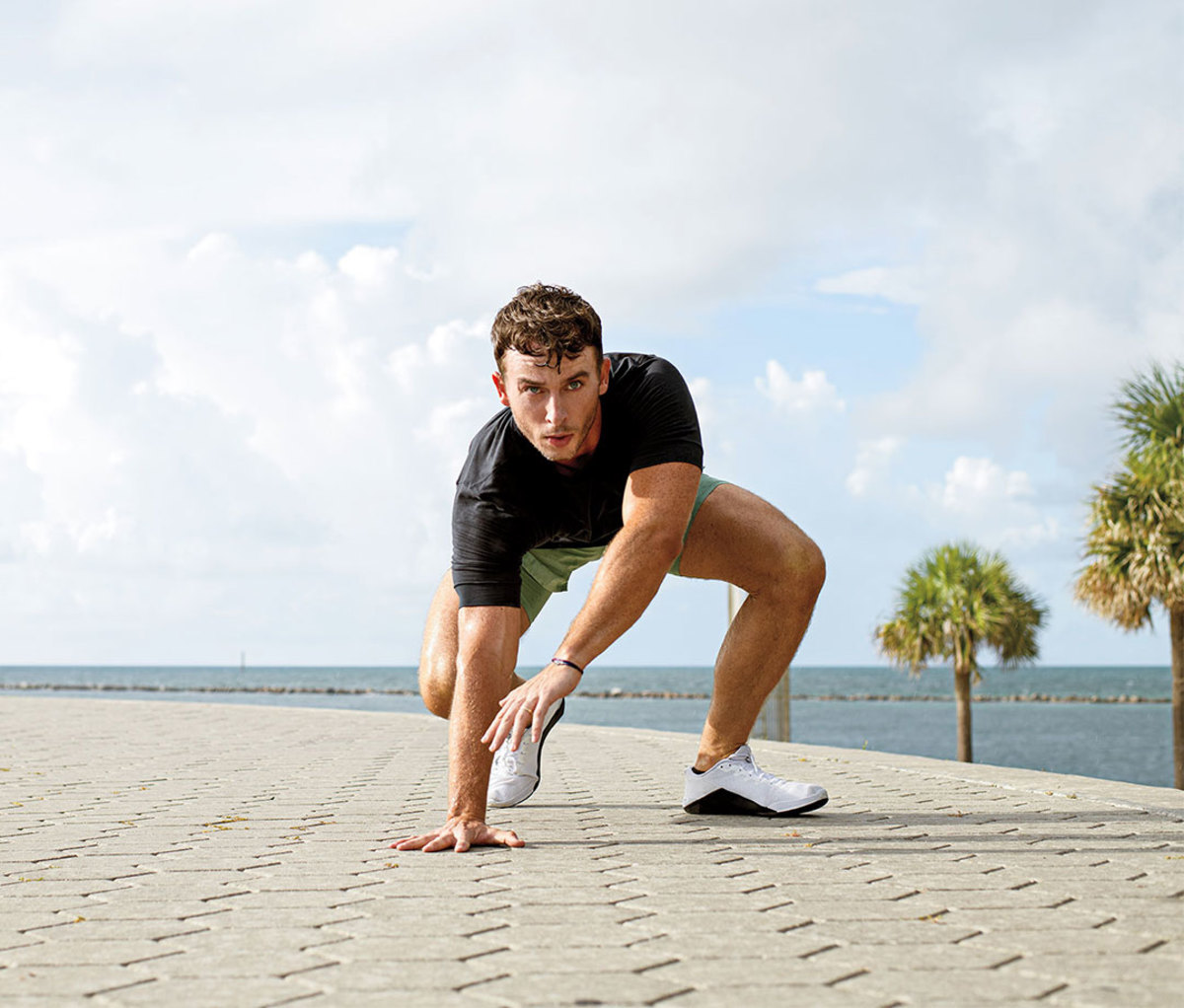
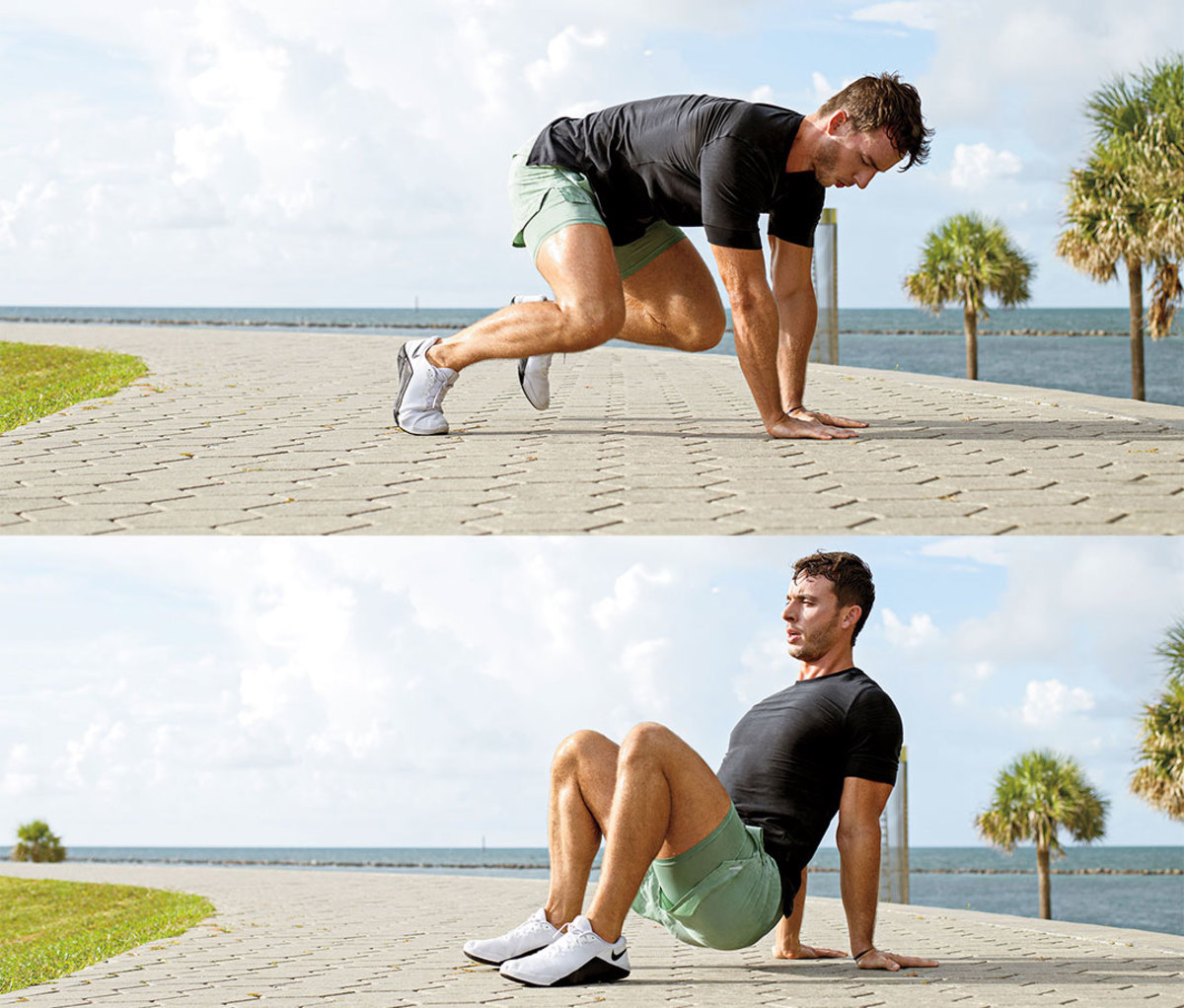
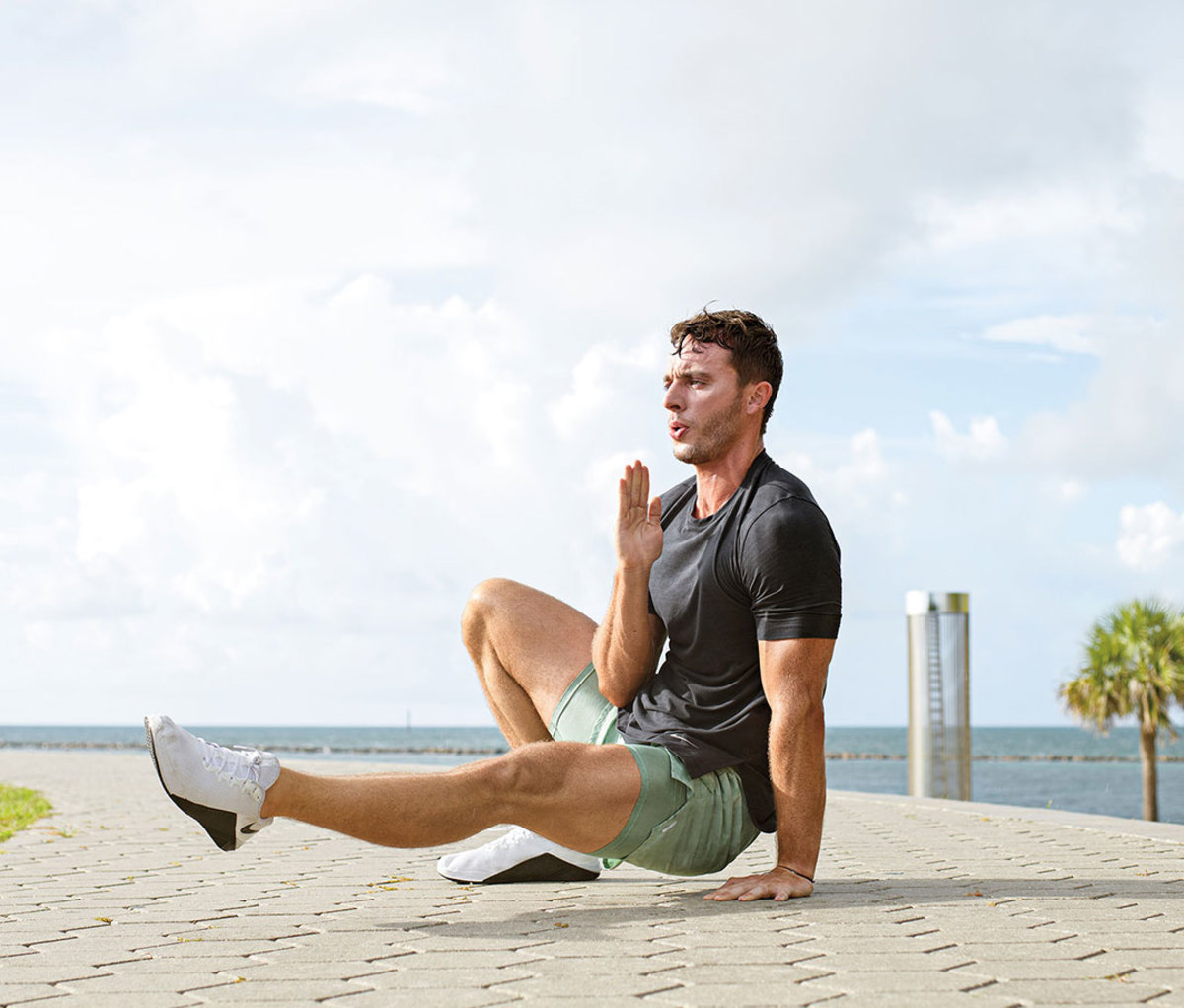
Crab position (A)James Woodley for Men's Journal
Workout 2. Crab to Underswitch Taps
Start in crab position (A), then drive through your right toe and left hand to pivot your body (B) onto all fours.
Crab to Underswitch Taps transition (B and C)James Woodley for Men's Journal
As soon as your limbs tap the ground (C), immediately redirect your momentum to the starting position (D).
Final position of Crab to Underswitch Taps (D)James Woodley for Men's Journal
Switch sides on each rep. Work 30 seconds on, 15 off.
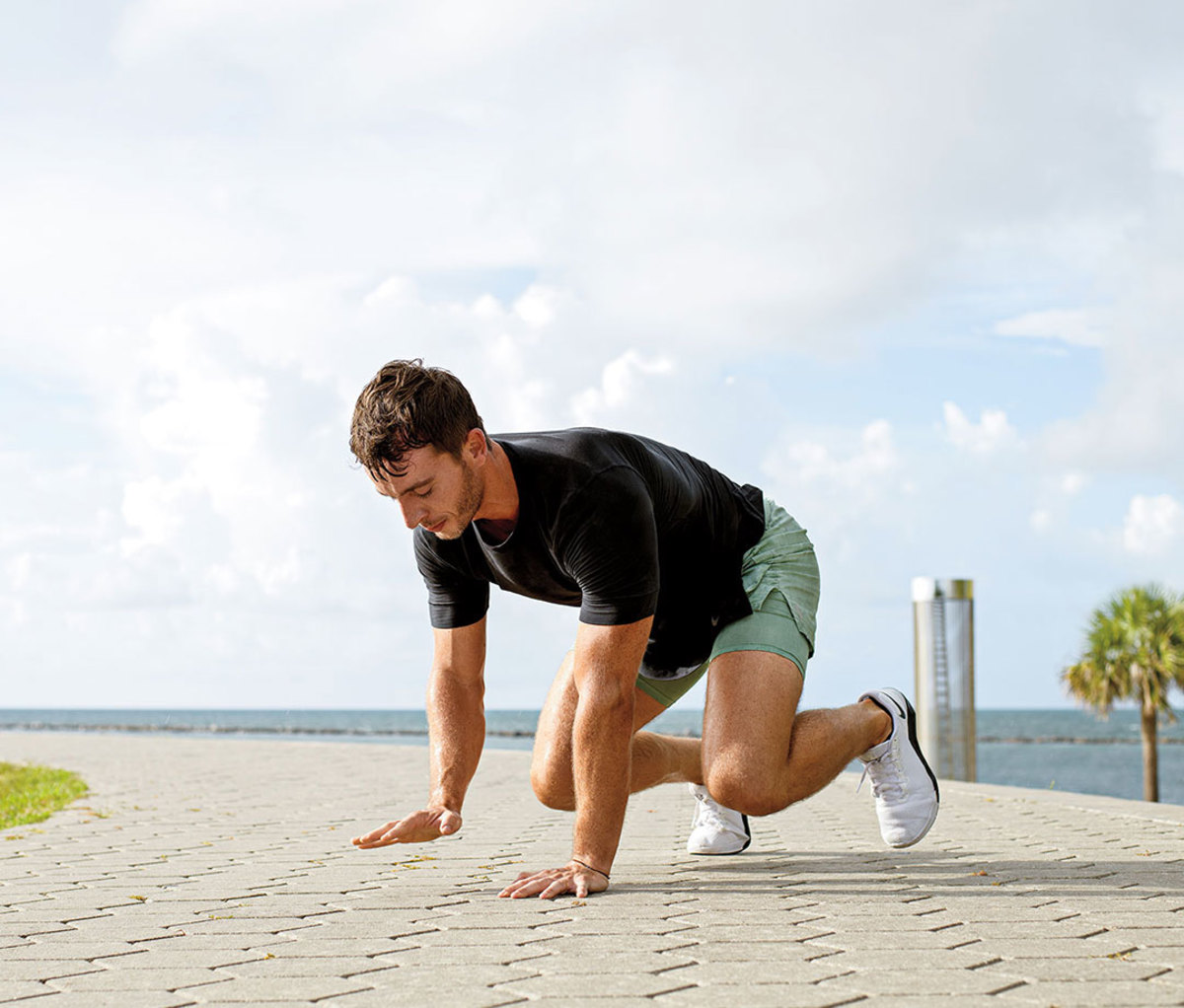
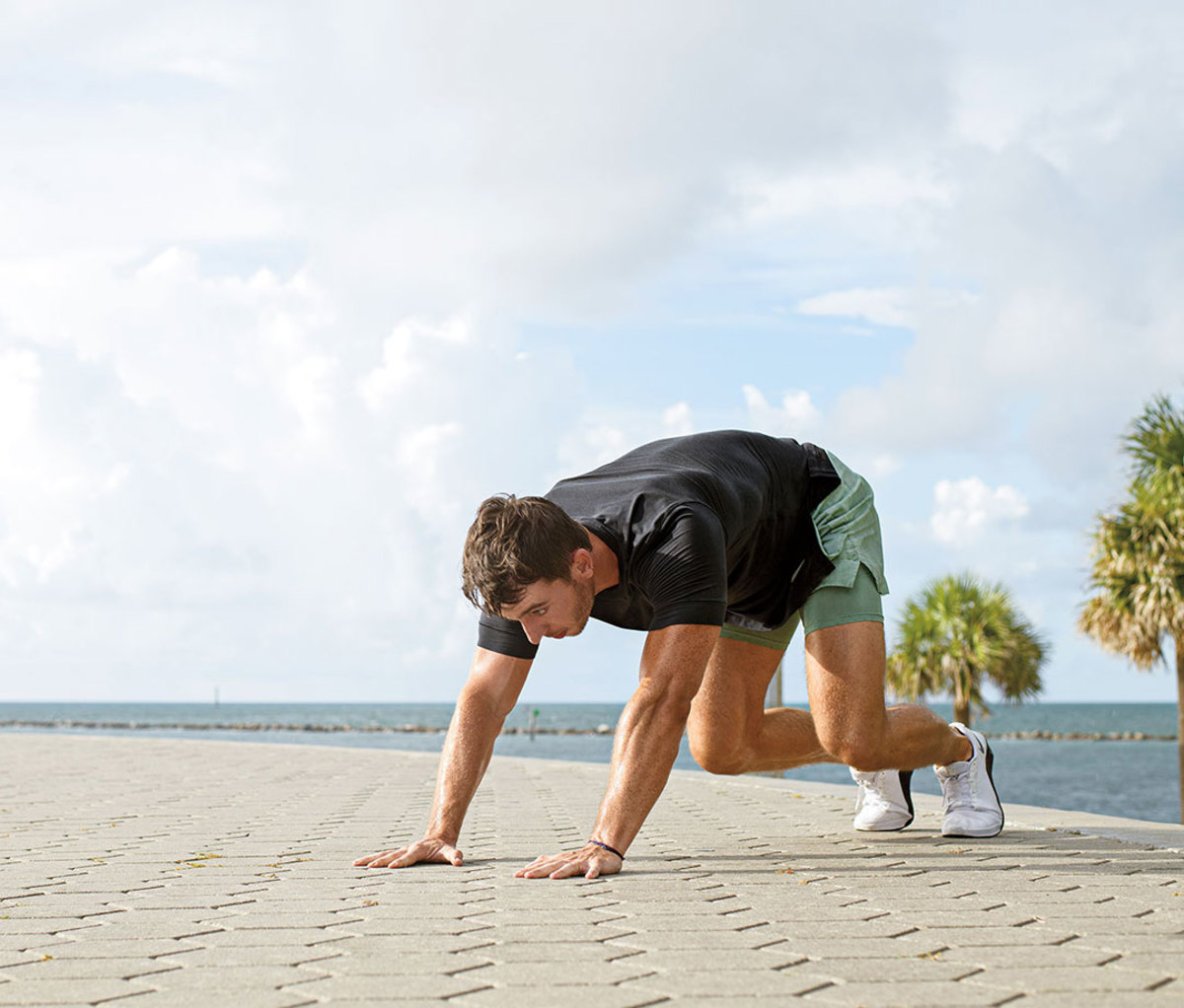
Start position of Traveling Beast (A)James Woodley for Men's Journal
Workout 3. Traveling Beast
Start in beast position, with hands directly below shoulders, and knees stacked over hips, hovering 1 inch off the ground. Engage your core, keep your trunk level and low, then take a small step forward, moving right hand and left foot, resisting rotation through your hips (A).
Traveling Beast (B)James Woodley for Men's Journal
On the next rep, move left hand and right foot, making sure they pick up and land simultaneously (B). Work 30 seconds on, 15 off.
Loaded Beast start position (A)James Woodley for Men's Journal
Workout 4. Loaded Beast to Front Step Through
Start in loaded beast position (A), then explode through the balls of your feet
(B) and jump forward with control.
Loaded Beast to Front Step Through transition (B)James Woodley for Men's Journal
Forcefully drive your left leg into full extension, toes pointed, as your right arm assumes a “guard” position at your midline, elbow bent with hand in front of face (C).
Final position Loaded Beast to Front Step Through (C)James Woodley for Men's Journal
Reverse the motion to return to start, switching sides with each rep. Work 20 seconds on, 10 off.
Finisher Flow
Beast to left-leg underswitch to right-arm crab reach to jumping left-leg underswitch to right-leg side kick through to right-leg full scorpion to left-leg underswitch to beast. Repeat opposite side. Work 60 seconds on, 30 off. Repeat 3 times.
from Men's Journal https://ift.tt/2TFIRhe
via IFTTT
The Johns Hopkins University Coronavirus Resource Center reported that 88,521 new coronavirus cases were recorded Thursday in the United States -- the most in a single day since the start of the pandemic.
from WebMD Healthhttps://img.webmd.com/dtmcms/live/webmd/consumer_assets/site_images/article_thumbnails/blog_posts/public-health/1800x1200_positive-covid-test.jpg https://ift.tt/3jF73eh
via IFTTT
Intermittent fasting (IF) is an approach to eating based on timing. The idea is that fasting for long enough allows insulin levels to fall low enough that our body will use fat for fuel. Growing evidence in animals and humans shows that this approach leads to significant weight loss. When combined with a nutritious, plant-based diet and regular physical activity, IF can be part of a healthy weight loss or maintenance plan, as I described in an earlier blog post.
But what did this study actually look at and find?
In the study, 141 patients were randomly assigned to 12 weeks of either a time-restricted eating plan (TRE) that involved fasting for 16 hours and eating only during an eight-hour window of the day, or a consistent meal timing (CMT) eating plan, with three structured meals a day plus snacks.
Neither group received any nutrition education or behavioral counseling, nor was physical activity recommended. There was no true control group (meaning a group that did not receive any instructions about meal timing).
Interestingly, both groups lost weight. Given the headlines, I had to read and reread the results several times, because they show that the IF group lost a statistically significant amount of weight from beginning to end — which wasn’t true in the CMT group. The researchers reported: “There was a significant decrease in weight in the TRE group (−0.94 kg; 95% CI, −1.68 kg to −0.20 kg; P = .01) and a nonsignificant decrease in weight in the CMT group (−0.68 kg; 95% CI, −1.41 kg to 0.05 kg; P = .07).”
Translated into plain English, the IF group lost more weight than could be due to chance: between half a pound and 4 pounds, or an average of 2 pounds. The structured meals group also lost some weight, although the amounts lost could have been due to chance: between 0.1 and 3 pounds, or an average of 1.5 pounds. The upshot was that there wasn’t a significant difference in weight change between the two groups. And the researchers saw a loss of muscle mass in the IF group that didn’t occur in the CMT group.
Diving deeper into the study
By the way, all of these folks may have been eating fried or fast foods, and sugary sodas and candy — we don’t know. The study doesn’t mention quality of diet or physical activity. This isn’t how IF is supposed to be done! And yet the IF folks still lost between half a pound and 4 pounds.
Importantly, the structured meals group also lost weight. While not significant enough to prove it was due to this intervention, for some participants it was enough to make structured meal weight loss differ little from IF weight loss. But think about it: structured meals are an intervention. After all, some people eat more than three times a day, consuming multiple small meals throughout the day. Telling people to limit their eating to three mealtimes plus snacks may actually be helping some to eat less.
The authors very well could have concluded that IF was indeed successful. They might also call for a follow-up study with a true no-intervention control group, as well as behavioral counseling, guidance on a healthy diet, and recommended activity levels for IF and CMT groups.
Does additional support make a difference?
Prior studies of IF that have provided behavioral counseling, and guidance on nutrition and activity, have definitely shown positive results. For example, in a previous blog post I described a 2020 American Journal of Clinical Nutritionstudy in which 250 overweight or obese adults followed one of three diets for 12 months:
IF on the 5:2 protocol, which means drastically reducing food intake for any two of five days of the week (down to 500 calories for women and 700 calories for men)
Mediterranean, which emphasized fruits and vegetables, legumes, nuts, seeds, whole grains, and olive oil with moderate fish, chicken, eggs, and dairy, and with an allowance of one glass of wine per day for women and two per day for men
Paleo, which emphasized fruits and vegetables, animal proteins, coconut products, butter, and olive oil, along with some nuts, seeds, and legumes.
And this is key: all participants were provided education on behavioral strategies for weight loss, stress management, sleep, and exercise.
Everyone lost weight. The IF group lost more than anyone with an average of 8.8 pounds, Mediterranean next at 6.2 pounds, and Paleo last at 4 pounds. Adherence was better with the Mediterranean diet (57%) and IF (54%) than with the Paleo diet (35%), and better adherence resulted in one to three pounds more weight loss. The Mediterranean and IF groups also saw significant drops in blood pressure, another good result.
What’s the takeaway here? A high-quality diet and plenty of physical activity — including resistance training — are critical for our good health, and nothing replaces these recommendations. IF is merely a tool, an approach that can be quite effective for weight loss for some folks. While this one negative study adds to the body of literature on IF, it doesn’t reverse it. We simply need more high-quality studies in order to have a better understanding of how to most effectively incorporate IF into a healthy lifestyle.


![RootRiver5[8][1]](https://www.mensjournal.com/wp-content/uploads/2018/09/rootriver581.jpg?w=200&h=113&crop=1&quality=86&strip=all)