Go to Blogger edit html and find these sentences.Now replace these sentences with your own descriptions.This theme is Bloggerized by Lasantha Bandara - Premiumbloggertemplates.com.
Go to Blogger edit html and find these sentences.Now replace these sentences with your own descriptions.This theme is Bloggerized by Lasantha Bandara - Premiumbloggertemplates.com.
Go to Blogger edit html and find these sentences.Now replace these sentences with your own descriptions.This theme is Bloggerized by Lasantha Bandara - Premiumbloggertemplates.com.
Go to Blogger edit html and find these sentences.Now replace these sentences with your own descriptions.This theme is Bloggerized by Lasantha Bandara - Premiumbloggertemplates.com.
Go to Blogger edit html and find these sentences.Now replace these sentences with your own descriptions.This theme is Bloggerized by Lasantha Bandara - Premiumbloggertemplates.com.
Eating fruits such as avocados, apples and berries may support your metabolic health, lowering your risk of Type 2 diabetes and supporting healthy blood pressure.
At the core of the condition, Type 2 diabetes is a function of insulin resistance, which in turn is a diet-induced condition. Obesity, high blood pressure and high blood sugar are also signs of metabolic syndrome, a group of risk factors that raise your risk of diabetes.1
Processed foods loaded with added sugars, processed grains and industrial processed omega-6 vegetable oils are the primary culprits that trigger insulin resistance, Type 2 diabetes and obesity, and while cutting out toxic foods such as these is essential, adding in healthy foods, like certain fruits, can be beneficial.
Optimizing your nutrition can help lower your insulin level, stabilize your glucose level and improve your overall energy. Fortunately, making small positive dietary changes, including eating more of certain healthy fruits, may help reduce your risk of diabetes and lower your blood pressure.
The Mighty Avocado Helps Lower Blood Sugar
Legend has it the early name for avocados — “alligator pear” — came from an early English mispronunciation and misunderstanding.2 The name may have continued since the skin has a vaguely reptilian appearance and the fruit is shaped like a pear. But no matter the name or appearance, avocados are superfoods that may also help lower your blood sugar.
Paul Spagnuolo, Ph.D., and a team at the University of Guelph in Ontario, Canada, revealed that a compound called avocation B, found only in avocados, can beneficially alter cellular processes that increase the risk of diabetes.3,4 In Canada, 25% of citizens are obese. This is a condition that increases the risk of Type 2 diabetes. By comparison, the prevalence of obesity in the U.S. was 42.4% in 2018.5
The team began the study by feeding mice a high-fat diet for eight weeks, which triggered obesity and insulin resistance. Over the next five weeks, the mice were separated into two groups. One group continued the high-fat diet and the other group’s food was supplemented with avocatin B.6
At the end of the five weeks, the researchers found the mice that were treated with avocatin B had gained significantly less weight than the control group and, more importantly, had a higher insulin sensitivity.7
The team then went on to test supplements in a human clinical trial in which they gave avocatin B as a dietary supplement to participants who were eating a typical Western diet. They found weight reductions in the individuals and no effect on the kidney, liver or skeletal muscles from the supplement. While speaking to Nutrition Insight, Spagnolo warned:8
“We want to stress that the benefit of this molecule is in its ability to help regulate blood glucose. Reductions in weight are likely a secondary effect. We realize that this is a desirable feature for most, however, urge caution for weight loss as the sole indication.”
Spagnuolo also spoke with a reporter from Yahoo! Life about the bioactive ingredient, avocatin B. He believes avocados are a healthy addition to the diet for people with diabetes and prediabetes, explaining:9
"When we talk about bioactives, think of it like the nutrients we get from other foods: we get Omega-3 fatty acids from eating fish and Vitamin C from oranges. AvoB is a bioactive ingredient in avocados, which can be an important dietary choice for diabetics and prediabetics.
When your metabolism is working, everything is in balance. You have ideal levels of blood sugar, good cholesterol, blood pressure, etc. … Science tells us that blood sugar imbalances can have a profound and negative impact on our health.
They can impact our energy levels, concentration, mood, and much more. And for diabetics, unbalanced blood sugars could lead to even more serious health complications like heart attack and stroke."
While the avocado is one of the healthiest foods, rich in monounsaturated fat, fiber, magnesium, potassium, vitamin K and carotenoids, there is also a dark side. Each avocado requires 70 liters (18.49 gallons) of water to produce, which means the fruit can be environmentally destructive. Read more about the challenge and what you can do to support sustainable methods for growing avocados at “Avocado — Superfood and Environmental Killer.”
High Flavanol Diet May Help Lower Blood Pressure
People with metabolic syndrome also have difficulty regulating their blood pressure. In what researchers called the first-of-its-kind study in the U.K., scientists used objective measures for dietary intake across thousands of residents, using data for 25,618 people in Norfolk, U.K., and compared the data against their blood pressure measurements.10
Most other studies look at links between nutrition and health but rely on the study participants’ self-reported data. In this analysis, the researchers measured the participants' flavanol intake using nutritional biomarkers present in the blood. They then compared those against their blood pressure measurements.11
The data revealed blood pressure measurement differences between people with the highest 10% of flavanols as compared to the lowest 10% between 2 and 4 mmHg. The researchers wrote this was comparable to the difference measured when a person switched to a Mediterranean diet or the Dietary Approaches to Stop Hypertension (DASH) diet.
Nutritionist Gunter Kuhnle at the University of Reading led the study. He talked about the importance of how the data were collected and the implications for consistent dietary intake of foods with flavanols, saying:12
"Previous studies of large populations have always relied on self-reported data to draw conclusions, but this is the first epidemiological study of this scale to objectively investigate the association between a specific bioactive compound and health. We are delighted to see that in our study, there was also a meaningful and significant association between flavanol consumption and lower blood pressure.
What this study gives us is an objective finding about the association between flavanols — found in tea and some fruits — and blood pressure. This research confirms the results from previous dietary intervention studies and shows that the same results can be achieved with a habitual diet rich in flavanols. In the British diet, the main sources are tea, cocoa, apples and berries.”
The subclass of flavanols measured in the study were flavan-3-ols,13 commonly found in tea, berries, apples and cocoa-based products.14 These same flavonoids have demonstrated benefits in other studies.15
Researchers have found those who drank tea consistently had a lower risk of all-cause mortality and were free of atherosclerotic cardiovascular disease for 1.41 years longer than those who did not drink tea.16 Of the tea tested, green tea was the most healthful. Green tea has also been linked with other health benefits that I discuss in “Tea Drinkers Shown To Be More Healthy.”
The High Cost of Diabetes
In 2011, the Centers for Disease Control and Prevention reported that diabetes affected 25.8 million people in the U.S.17 This was 18.8 million who were diagnosed and 7 million who were undiagnosed, representing 8.3% of the population. A short nine years later those numbers had jumped drastically higher.
The CDC currently reports 34.2 million people with diabetes, 26.9 million of which are diagnosed and 7.3 million are undiagnosed.18 The total represents 10.5% of the U.S. population. They also estimate the number of people with prediabetes who are over 18 years as 88 million people or 34.5% of the adult population.
In total, 45% of the U.S. population is affected by diabetes or prediabetes, which can lead to long-term complications including cardiovascular disease, nerve damage and Alzheimer’s disease.19
The combination of many individuals with diabetes and the number of complications associated with the condition contribute to the staggering financial costs of the disease. According to the American Diabetes Association, people with diabetes have 2.3 times more health care costs than those without diabetes.20
Annually, this totals $327 billion, which means 1 in every 7 health care dollars is spent on treating people for diabetes and its complications. The largest expenditures are on inpatient care, prescription medications, diabetes supplies and physician office visits. There are also indirect costs to the individuals and employers, including $26.9 billion lost in reduced productivity and $3.3 billion lost in absenteeism.
Address Mitochondrial Dysfunction and Insulin Sensitivity
At the center of the pathology behind diabetes is mitochondrial dysfunction. Eating a high-carbohydrate diet that bathes your mitochondria in glucose can suppress mitochondrial metabolism.21
As I've written before, your mitochondria are energy producers inside most of your cells and are the primary sources of energy to keep your body functioning. Mitochondrial dysfunction is at the heart of several disease pathologies, including cardiovascular diseases22 and neurological dysfunction.23
While there is no easy answer, I believe the foundational first step to addressing metabolic defects responsible for mitochondrial dysfunction, Type 2 diabetes and obesity is to make food choices that boost mitochondrial health. I discussed this in detail in my book Fat for Fuel.
In my book I discussed the importance of metabolic flexibility and insulin sensitivity. Achieving this through nutritional ketosis helps to support your mitochondrial health. To reverse Type 2 diabetes, you need to recover insulin and leptin sensitivities.
As for fruit consumption, eating small amounts can be an excellent way to increase your intake of beneficial antioxidants, vitamins and minerals. But moderation is key, especially if you have metabolic syndrome, high blood pressure and/or Type 2 diabetes.
Because fruit contains fructose, it can increase your risk of insulin resistance if you eat large amounts. Examples of lower fructose fruits that are beneficial for most people include avocados, berries, kiwi and citrus fruits.
From the beginning of the COVID-19 pandemic, the clarion call has been to test, test and test some more. However, right from the start, serious questions arose about the tests being used to diagnose this infection, and questions have only multiplied since then.
Positive reverse transcription polymerase chain reaction (RT-PCR) tests have been used as the justification for keeping large portions of the world locked down for the better part of 2020.
This, despite the fact that PCR tests have proven remarkably unreliable with high false result rates, and aren't designed to be used as a diagnostic tool in the first place as they cannot distinguish between inactive viruses and "live" or reproductive ones.
Dr. Mike Yeadon, former vice president and scientific director of Pfizer, has even gone on record stating1 that false positive results from unreliable PCR tests are being used to "manufacture a 'second wave' based on 'new cases,'" when in fact a second wave is highly unlikely.
Understanding PCR Tests
Before his death, the inventor of the PCR test, Kary Mullis, repeatedly yet unsuccessfully stressed that this test should not be used as a diagnostic tool for the simple reason that it's incapable of diagnosing disease. A positive test does not actually mean that an active infection is present. As noted in a U.S. Centers for Disease Control and prevention publication on coronavirus and PCR testing dated July 13 2020:2
Detection of viral RNA may not indicate the presence of infectious virus or that 2019-nCoV is the causative agent for clinical symptoms.
The performance of this test has not been established for monitoring treatment of 2019-nCoV infection.
This test cannot rule out diseases caused by other bacterial or viral pathogens.
So, what does the PCR test actually tell us? The PCR swab collects RNA from your nasal cavity. This RNA is then reverse transcribed into DNA. However, the genetic snippets are so small they must be amplified in order to become discernible. Each round of amplification is called a cycle.
Amplification over 35 cycles is considered unreliable and scientifically unjustified, yet Drosten tests and tests recommended by the World Health Organization are set to 45 cycles.
What this does is amplify any, even insignificant sequences of viral DNA that might be present to the point that the test reads "positive," even if the viral load is extremely low or the virus is inactive. As a result of these excessive cycle thresholds, you end up with a far higher number of positive tests than you would otherwise.
We've also had problems with faulty and contaminated tests. As soon as the genetic sequence for SARS-CoV-2 became available in January 2020, German researchers quickly developed a PCR test for the virus.
In March 2020, The New York Times3 reported the initial test kits developed by the CDC had been found to be flawed. The Verge also reported4 that this flawed CDC test in turn became the basis for the WHO's test, which the CDC ended up refusing to use.
PCR Tests Cannot Detect Infection
Perhaps most importantly of all, the PCR tests cannot distinguish between inactive viruses and "live" or reproductive ones. What that means is that PCR tests cannot detect infection. Period. It cannot tell you whether you're currently ill, whether you'll develop symptoms in the near future, or whether you're contagious.
The tests may pick up dead debris or inactive viral particles that pose no risk whatsoever to the patient and others. What's more, the test can pick up the presence of other coronaviruses, so a positive result may simply indicate that you've recuperated from a common cold in the past.
An "infection" is when a virus penetrates into a cell and replicates. As the virus multiplies, symptoms set in. A person is only infectious if the virus is actually replicating. As long as the virus is inactive and not replicating, it's completely harmless both to the host and others.
Chances are, if you have no symptoms, a positive test simply means it has detected inactive viral DNA in your body. This would also mean that you are not contagious and pose no risk to anyone.
For all of these reasons, a number of highly respected scientists around the world are now saying that what we have is not a COVID-19 pandemic but a PCR test pandemic. In his September 20, 2020, article5 "Lies, Damned Lies and Health Statistics — The Deadly Danger of False Positives," Yeadon explains why basing our pandemic response on positive PCR tests is so problematic.
Artificially Created Justifications for Totalitarian Controls
As reported by The Vaccine Reaction, September 29, 2020:6
"The test's threshold is so high that it detects people with the live virus as well as those with a few genetic fragments left over from a past infection that no longer poses a risk. It's like finding a hair in a room after a person left it, says Michael Mina, MD, an epidemiologist at the Harvard T.H. Chan School of Public Health.7
In three sets of testing data that include cycle thresholds compiled by officials in Massachusetts, New York and Nevada, up to 90% of people testing positive carried barely any virus, a review by The New York Times found8 …
'We've been using one type of data for everything, and that is just plus or minus — that's all,' Dr. Mina said. 'We're using that for clinical diagnostics, for public health, for policy decision-making.'
But 'yes' or 'no' isn't good enough, he added. It's the amount of virus that should dictate the infected patient's next steps. 'It's really irresponsible, I think, to forgo the recognition that this is a quantitative issue,' Dr. Mina said."
Again, medical experts agree any cycle threshold over 35 cycles makes the test too sensitive, as at that point it starts picking up harmless inactive DNA fragments. Mina believes a more reasonable cutoff would be 30 or less.
According to The New York Times,9 the CDC's own calculations show it's extremely unlikely to detect live viruses in samples that have gone through more than 33 cycles, and research10 published in April 2020 concluded patients with positive PCR tests that had a cycle threshold above 33 were not contagious and could safely be discharged from the hospital or home isolation.
Importantly, when officials at the New York state laboratory, the Wadsworth Center, reanalyzed testing data at The Times' request, they found that changing the threshold from 40 cycles to 35 cycles eliminated about 43% of the positive results. Limiting it to 30 cycles eliminated a whopping 63%.11 The Vaccine Reaction adds:12
"In Massachusetts, from 85 to 90% of people who tested positive in July with a cycle threshold of 40 would have been deemed negative if the threshold were 30 cycles, Dr. Mina said. 'I would say that none of those people should be contact-traced, not one,' he said.
'I'm really shocked that it could be that high — the proportion of people with high CT value results,' said Ashish Jha, MD, director of the Harvard Global Health Institute. 'Boy, does it really change the way we need to be thinking about testing'13 …
In late August, the U.S. Food and Drug Administration (FDA) approved the first rapid coronavirus test that doesn't need any special computer equipment. Made by Abbot Laboratories, the 15-minute test [BinaxNOW] will sell for U.S. $5 but still requires a nasal swab to be taken by a health worker.14
The Abbot test is the fourth rapid point-of-care test that looks for the presence of antigens rather than the virus's genetic code as the PCR molecular tests do.15"
Massive Waste of Resources
As noted by Dr. Tom Jefferson and professor Carl Henegan in an October 31, 2020, article in the Daily Mail,16 mass PCR testing has been a massive waste or resources, as it doesn't provide us with the information we actually need to know — who's infectious, how far is the virus spreading and how fast does it spread?
Instead, it has led to economic devastation from business shutdowns and isolating noninfectious people in their homes for weeks and months on end. Jefferson and Henegan claim they shared their pandemic response plan with British Prime Minister Boris Johnson over a month ago, and just presented it to him again. "We urge him to pay attention and embrace it," they write, adding:
"There are only two things about which we can be certain: first, that lockdowns do not work in the long term … The idea that a month of economic hardship will permit some sort of 'reset', allowing us a brighter future, is a myth. What, when it ends, do we think will happen? Meanwhile, ever-increasing restrictions will destroy lives and livelihoods.
The second certainty is this: that we need to find a way out of the mess that does no more damage than the virus itself … Our strategy would be to tackle the four key failings."
These four areas are:
Addressing the problems in the government's mass testing program
Addressing "the blight of confused and contradictory statistics"
Protect and isolate the vulnerable — primarily the elderly, but also hospitalized patients in general and staff — while allowing the rest to maintain "some semblance of normal life"
Inform the public about the true and quantifiable costs of lockdown that "kill people just as surely as COVID-19"
"If we do these things, there is real hope that we can learn to live with the virus. That, after all, was supposed to be the plan," Jefferson and Henegan note. With regard to testing, the pair call "for a national program of testing quality control to ensure that results are accurate, precise and consistent."
Importantly, we must not rely on positive/negative readings alone. The results must be assessed in relation to other factors, such as the age of the subject and whether they are symptomatic, to determine who actually poses an infectious risk. You can review the full details of their proposed plan at the end of their Daily Mail article.17
Lockdown Dangers Have Been Kept Out of Public Discussion
Jefferson and Henegan aren't the only ones highlighting the fact that the global lockdown strategy is causing more harm and destruction than the virus itself. In a June 16, 2020 article in The Federalist, James Lucas, a New York City attorney, wrote:18
"If we're going to allow models and modelers to dictate the entire nature of our society, one would hope that the models are as complete as possible. Yet the epidemiological models that have so transformed our world are seriously incomplete, and therefore fundamentally inadequate.
Any medical therapy is supposed to be tested for both efficacyandsafety. There have been several studies19 examining theeffectiveness of the lockdowns in combating the spread of the COVID-19 virus, with mixed conclusions.
So far, however, none of these studies or models have analyzed the safety side of the lockdown therapy. In response to questions from physician Sens. Rand Paul and Bill Cassidy, Dr. Anthony Fauci admits20 this side of the equation has not been accounted for in the models now driving our world.
As noted in an open letter21 recently signed by more than 600 health-care professionals, the public health costs from the lockdowns — described as a 'mass casualty incident' are real and growing.
These models are estimations based on existing research. The constantly changing projections of coronavirus deaths are extrapolations from research on previous epidemics. Yet modelers have no excuse for leaving evaluations of the lockdowns' massive costs to public health out of their models."
The Hidden Costs of Lockdowns
How does the "lockdown therapy" affect public safety? In his article, Lucas highlights the following:22
•Increased chronic disease rates due to unemployment, poverty and putting non-COVID medical care on hold — Research23 by the Veterans Administration has shown delaying cancer treatment for just one month led to a 20% increase in mortality. Another study24 found each one-month delay in breast cancer diagnosis increased mortality by 10%
•Increased rates of mental health problems due to unemployment and isolation
•Increased mortality rates from suicide — In one study,25 being unemployed was associated with a twofold to threefold higher relative risk of suicide. A more recent study26 estimates "deaths of despair" linked to lockdowns may be around 75,000 in the U.S.
•Reduced collective life span — Extended unemployment is also associated with shorter, unhealthier lives. Hannes Schwandt, a health economics researcher at Northwestern University, estimates an extended economic shutdown could shorten the lifespan of 6.4 million Americans entering the job market by an average of about two years.27 Lucas notes:
"If epidemiologists don't care to take account of this toll, another profession must. A study28 just released by a group of South African actuaries estimates that the net reduction in lifespan from increased unemployment and poverty due to a national lockdown will exceed the increased lifespan due to lives saved from COVID-19 by the lockdown by a factor of 30 to 1.
In other words, each year of additional life attributable to isolating potential coronavirus victims in the lockdown comes at a cost of 30 years lost due to the negative public health effects of a lockdown …"
Lack of education is also associated with significantly shorter life spans and poorer health. High school drop-outs die on average nine years sooner than college graduates,29 and school closings disproportionally affect poorer students.
Who Pays the Most?
As noted by Lucas, in addition to calculating the overall costs on society, modelers must also determine "on whom those costs fall," because the costs are not borne equally by all. The consequences of the lockdowns disproportionally affect those who are already the most vulnerable — financially and health wise — such as those living near the poverty line, the chronically ill, people with mental illness and minorities in general.
"Contrary to the PR slogan, we are NOT all in this together," Lucas writes.30"We need less insipid pro-lockdown propaganda extolling the virtues of the 'essential' workers, and more serious analysis of the enormous public health toll the lockdowns are imposing on them. Otherwise, we may come to see the era of coronavirus as simply the time where pro-lockdown elitessacrificed the working class31to protect themselves."
A Pandemic of Fearmongering
An October 28, 2020, article featured by the Ron Paul Institute points out that:32
"Ever since the alleged pandemic erupted this past March the mainstream media has spewed a non-stop stream of misinformation that appears to be laser focused on generating maximum fear among the citizenry.
But the facts and the science simply don't support the grave picture painted of a deadly virus sweeping the land. Yes, we do have a pandemic, but it' a pandemic of ginned up pseudo-science masquerading as unbiased fact."
Nine facts that can be backed up with data "paints a very different picture from the fear and dread being relentlessly drummed into the brains of unsuspecting citizens," the article states. In addition to the fact that PCR testing is practically useless, for all the reasons already mentioned, these data-backed facts include:
1. A positive test is NOT a "case" — As explained by Dr. Lee Merritt in her August 2020 Doctors for Disaster Preparedness33 lecture, featured in "How Medical Technocracy Made the Plandemic Possible," media and public health officials appear to have purposefully conflated "cases" or positive tests with the actual illness.
Medically speaking, a "case" refers to a sick person. It never ever referred to someone who had no symptoms of illness. Now all of a sudden, this well-established medical term, "case," has been completely and arbitrarily redefined to mean someone who tested positive for the presence of viral RNA. As noted by Merritt, "That is not epidemiology. That's fraud."
2. According to the CDC34and other research data,35 the COVID-19 survival rate is over 99%, and the vast majority of deaths occur in those over 70, which is close to normal life expectancy.
3. CDC analysis reveals 85% of patients testing positive for COVID-19 wore face masks "often" or "always" in the two weeks preceding their positive test. As noted in the Ron Paul article,36 "The only rational conclusion from this study is that cloth face masks offer little if any protection from Covid-19 infection."
5. The death rate has not risen despite pandemic deaths — Data37,38 show the overall all-cause mortality has remained steady during 2020 and doesn't veer from the norm. In other words, COVID-19 has not killed off more of the population than would have died in any given year anyway.
As noted in the Ron Paul article,39 "According to the CDC as of early May 2020 the total number of deaths in the US was 944,251 from January 1 — April 30th. This is actually slightly lower than the number of deaths during the same period in 2017 when 946,067 total deaths were reported."
15,000 Doctors and Scientists Call for End to Lockdowns
All in all, there are many reasons to suspect that continued lockdowns, social distancing and mask mandates are completely unnecessary and will not significantly alter the course of this pandemic illness, or the final death count.
And, with regard to universal PCR testing where individuals are tested every two weeks or even more frequently, whether they have symptoms or not, this is clearly a pointless effort that yields useless data. It's just a tool to spread fear, which in turn allows for the rapid implementation of the totalitarian control mechanisms required to pull off The Great Reset. Fortunately, more and more people are now starting to see through this plot.
About 45,000 scientists and doctors worldwide have already signed the Great Barrington Declaration,40 which calls for the end to all lockdowns and implementation of a herd immunity approach to the pandemic, meaning governments should allow people who are not at significant risk of serious COVID-19 illness to go back to normal life, as the lockdown approach is having a devastating effect on public health — far worse than the virus itself.41,42 The declaration states:43
"Coming from both the left and right, and around the world, we have devoted our careers to protecting people. Current lockdown policies are producing devastating effects on short and long-term public health …
The most compassionate approach that balances the risks and benefits of reaching herd immunity, is to allow those who are at minimal risk of death to live their lives normally to build up immunity to coronavirus through natural infection, while better protecting those who are at highest risk. We call this focused protection."
The declaration points out that current lockdown policies will result in excess mortality in the future, primarily among younger people and the working class. As of November 5, 2020, The Great Barrington Declaration44 had been signed by 11,791 medical and public health scientists, 33,903 medical practitioners and 617,685 "concerned citizens."45
Two common health conditions experienced by many people are insulin resistance and sleep disturbances, and it turns out the two are related. Insulin resistance is the basis for Type 2 diabetes. According to the American Diabetes Association, at least 10.5% of the population had diabetes in 2018.1
Yet, testing of more than 14,000 people using an oral glucose tolerance test by Dr. Joseph Kraft has shown people can have abnormally high insulin levels with a normal glucose response using a glucose tolerance test.2
He calls this condition diabetes in situ3 and believes by correcting high insulin levels, which lead to insulin resistance, you can also directly and indirectly prevent damage to your vascular system.
Kraft’s testing demonstrated that the prevalence of insulin resistance is far higher than originally thought and greater than the estimates of people with diabetes.4 By the same token, the number of people who have difficulty getting adequate amounts of quality sleep each night is also higher than you may expect.
For several years, The Mattress Firm has commissioned a survey to look at sleep habits and the number of hours people are sleeping each night. The results from 2019 show that Americans are sleeping fewer hours and they are less satisfied with the quality of their sleep.5
On average, 52% of those answering the survey reported getting six hours or less per night of sleep and 40% rated the quality of sleep as “not very good” or “not good at all.” This may be related to the activities they routinely do where they sleep, including watching television, eating and playing video games.
Sleep disturbances or disorders affect nearly 70 million people in the U.S. They include sleep apnea, insomnia, narcolepsy and restless leg syndrome.6 Yet, medical conditions are not the only reason your sleep may be disturbed. Experts also find long naps after lunch, eating within a few hours of bedtime and consuming too much caffeine can all affect sleep quality and quantity.7
Blood Glucose and Insulin Raise Core Body Temperature
The body is in a constant state of thermoregulation, which it achieves through complex interactions between the hypothalamus, muscles, nervous system and vascular system. This process tightly controls body temperature in the face of ambient temperature in your surroundings and your internal heat generation.
Your body requires this for homeostasis and to preserve a stable internal environment in which enzymes, proteins and hormones continue to work.8 Even a shift of a few degrees in body temperature can have disastrous results on your health or your life.9 The balance to maintain core body temperature is a form of homeostasis, which is affected by glucose control and insulin levels.
As Kraft demonstrated, hyperinsulinemia often predates insulin resistance and symptoms of diabetes. A team of researchers from The Scripps Research Institute has found that high levels of insulin raise core body temperature in an animal model.10
This may mean that even people without insulin resistance can experience a rise in core temperature after consuming a meal high in carbohydrates that drives insulin secretion. Blood glucose levels can also reduce your ability to dissipate heat and thus maintain body temperature.
Your body uses sweating as one way of getting rid of excess heat produced during metabolism, from activity or other external stimuli. Thermoregulatory sweating is predominantly controlled by the hypothalamus.11 As core body temperature rises, it can have negative consequences on your cardiovascular system and glycemic control.
Researchers have found people who have poor blood sugar control with diabetes-related complications are particularly vulnerable to poor temperature control.12 However, any person, with or without diabetes, can experience elevation in core body temperature with rising blood sugar levels that may happen after a meal high in carbohydrates.13
Elevated Glucose Makes Exercise and Sleep Challenging
To remove excess heat created during metabolism or exercise, your blood vessels normally fluctuate in size to accommodate thermoregulation. The blood vessels around your organs and in your core constrict, sending more blood to the skin and exposing it to cooler air in the environment.
Higher levels of blood glucose can affect the osmolality of your plasma, which then impairs your body's ability to send blood to the periphery (skin) and to sweat.14 The challenge goes beyond feeling a little hot since it has a significant effect on your ability to experience deep sleep.
One study analyzed body temperature in people with Type 1 diabetes.15 The participants had their peripheral body temperature recorded for 10 consecutive days while awake and asleep. The researchers found thermoregulation alterations in the participants that led to shallow sleep.
They found during five hours of the day when it would be expected the body temperature would be the lowest, those with Type 1 diabetes had higher levels. They believed it “could be explained by less efficient heat dissipation.”16
The ability to get rid of heat during exercise is also important to maintain homeostasis and protect your life. Researchers have found those with higher levels of cardiovascular fitness may have an improved ability to dissipate heat during exercise.17
However, data show that even people with Type 2 diabetes who are relatively active have a significantly reduced ability to dissipate heat as compared to people without diabetes.
During a 60-minute exercise session, researchers found those with diabetes stored 1.54-fold more heat and had a lower evaporative heat loss.18 Additionally, those with diabetes kept greater amounts of heat in their body within the first 60 minutes after exercise had stopped.
Relationship Between Deep Sleep and Core Temperature
If you've ever woken up because you're too hot or cold, you know that ambient temperature affects your sleep quality. Even subtle differences in the temperature in the room or your core temperature can influence your sleep, for better or worse. Your body temperature cycles with your sleep-wake rhythm, decreasing at night while you're asleep and increasing during the day.19
Your core and peripheral skin temperatures are influenced by several factors, including your sleep environment, your clothing and blankets, mattress type, ambient room temperature and when you last ate. Increasing your skin temperature just 0.72 degrees F (0.4 degrees Celsius) can suppress nighttime wakefulness and shift your sleep into deeper stages.20
When fragmented sleep was measured subjectively in 765,000 people in the U.S., data showed that increasing nighttime temperature raised the number of self-reported nights of insufficient sleep.21 Other research also found that high temperatures affected objective and subjective factors of sleep and led to:22
Reduced sleep duration
Shallow sleep
Lower sleep calmness
Difficulty falling asleep
Lower sleep satisfaction
Sleeping in a cooler room may therefore lead to fewer disruptions in your sleep. The National Sleep Foundation (NSF) suggests the ideal bedroom temperature is somewhere between 15.5 degrees C (60 degrees F) and 19.4 degrees C (67 degrees F).23 You want to avoid extreme temperatures (either too hot or too cold), as these could activate thermoregulatory defense mechanisms that cause you to wake up.24
A second reason to sleep in a cool room is the beneficial effect it has on brown fat. This type of fat generates heat by burning calories to help maintain your core temperature. Sleeping in a cool room (19 C or 66.2 F) for four weeks doubled the volume of brown fat in study volunteers, improving insulin sensitivity at the same time,25,26 which helps to improve your sleep quality.27
Shivering may be the mechanism that triggers brown fat to produce heat and burn calories,28 but shivering is not conducive to sleep. You are after the Goldilocks zone — cool enough to help you sleep and increase brown fat but not so cool that it makes you uncomfortable.
The exact best temperature will vary by individual but sleeping in a cool room with a thin sheet and blanket is generally enough to keep your skin temperature warm, so you feel comfortable, while still benefiting from the cool sleep temperatures.29
Deep Sleep Is Vital to Your Health
If you’ve been reading my newsletter, you know how important quality sleep is to your overall health. Dr. Zeeshan Khan, pulmonologist from the Deborah Heart and Lung Center, spoke with a reporter from KYW radio about sleep deprivation, the importance of quality sleep and the relationship to cardiovascular disease:30
“Almost every cardiac morbidity you can think of has been linked to sleep apnea. Heart disease, heart failure, arrhythmias, strokes, inflammatory issues like diabetes, worsening obesity — the list can go on and on.”
He recommends that on average, people should get seven hours of sleep each night, but he also shared that in America, about 35% of people get less than that. “We are kind of a sleep-deprived nation,” he said.31 This sleep deprivation also shows up as fragmented sleep, when you wake up during the night and sometimes have trouble going back to sleep.
Researchers at UC Berkeley studied 1,600 subjects to identify the effect fragmented sleep had on atherosclerosis. The authors believe the data is important since improving sleep quality may "represent one preventive strategy for lowering inflammatory status and thus atherosclerosis risk, reinforcing public health policies focused on sleep health."32
Another study demonstrated the importance quality sleep has on your cognitive health. Researchers from Italy showed astrocytes, a type of glial cell in the brain that gets rid of unnecessary nerve connections under normal circumstances, will start to break down healthy nerve synapses in response to chronic sleep deprivation.33
There is a high cost to sleep deprivation and low-quality sleep as it is also associated with an increased risk of accidents,34 higher potential for diabetes and high blood pressure35 and decreased life expectancy.36
Simple Body Hacks to Deep Sleep
One simple way of improving your sleep is to address your body’s core temperature. Dr. Dianne Augelli, a sleep disorder specialist at NY-Presbyterian/Weill Cornell Medical Center, says: “You don’t want to heat yourself up right before bed. Cooling down is a signal that tells us we’re supposed to go to sleep.”37
When you interrupt this process by eating late in the evening, and thus increasing your glucose and insulin levels and reducing your ability to dissipate heat, it can make the process of falling asleep more difficult and the potential of achieving deep sleep more challenging.
If you do happen to eat within three to four hours before falling asleep, consider taking a cool shower within an hour of going to sleep to help trigger a reduction in core body temperature.
It is important not to take a cold shower, as it can have the reverse effect as your body fights to maintain homeostasis. Taking a lukewarm shower, and towel drying slowly to allow heat to dissipate, may be all that's needed.
In addition to sleeping in a cool room with a thin sheet and blanket as I discussed above, you may consider the additional tips in “Top 33 Tips to Optimize Your Sleep Routine” to help you fall asleep faster and stay asleep.
Depending on where you live, COVID-19 rules could be putting a damper on holiday festivities this year. California, for example, recently released a long list of killjoy rules for the holidays, which includes:1
Limiting get-togethers to a maximum of three households, including hosts and guests
Dinner must be served outdoors
Limiting the gathering to two hours or less
Attendees may go inside for bathroom breaks but only if the restrooms are frequently sanitized
Face coverings must be worn at all times and can only be removed, briefly, to eat or drink, or in the case of emergency medical needs such as using an inhaler or taking medication, or if feeling light-headed
Non-household members must be spaced at least 6 feet apart in all directions
Singing, chanting, shouting, physical exertion and the use of wind instruments are “strongly discouraged”
Food and drink should be served in disposable containers and self-serve communal containers or shared utensils are not permitted
Handwashing or hand sanitizing facility must be available and all attendees should use them frequently
At What Price Safety?
Should government be permitted to micromanage how and with whom you spend your holidays? As noted by A.J. Kay in a recent Medium article,2 “If safety requires us to indefinitely forfeit the most valuable parts of our lives, what exactly are we trying to save?”
That’s a question well worth asking. Just how great a price are you willing to pay for the illusion of safety? SARS-CoV-2 has a survival rate of 99.99% for those under the age of 40.3 Even people over the age of 60 who aren’t residents of nursing homes have a survival rate of 98.29%.4
Data5,6 also show the overall all-cause mortality has remained steady during 2020 and doesn’t veer from the norm — in other words, COVID-19 has not killed off more of the population than would have died in any given year anyway — yet residents in many areas are now told, in great detail, how they can and cannot celebrate their holidays. Is it worth it?
“This will be the final Thanksgiving for 2.8 million (the annual all-cause death toll) of our fellow Americans. It could be my last — or yours. That likelihood is significantly higher for our elderly loved ones, too many of whom will not have seen or hugged their family in nine months,” Kay writes.7
“The hard truth is that we do not know who will be around for Thanksgiving next November. What we do have is right now — this moment — today. We aren’t promised one second more …
We’ve already forgone countless once-in-a-lifetime events to mitigate a newly-minted definition of risk which takes only one variable into account. And have neglected to acknowledge that many of our seniors — the most vulnerable among us — don’t even want that kind of ‘safety’ because it costs precious moments with their families …
There’s only one ‘unsafe’ version of Thanksgiving for me and that’s failing to be present with my family, allowing weaponized shame and performative restrictions to keep us apart. God forbid one of us isn’t sitting at that table next year, I can’t imagine grappling with that regret. And if one (or all) of us get COVID, so be it.”
Isolation — A Fate Worse Than Death?
As reported by the Daily News,8 October 19, 2020, forced isolation due to COVID-19 concerns are hurting seniors who struggle with loneliness and depression at ever greater numbers.
The article features the story of Lezrette Hutchinson, a 64-year-old retiree in the West Bronx who in recent days is starting to find herself “heading to bed as early as 5 p.m., exhausted from a host of mounting frustrations,” such as “technological hurdles that came with virtual doctor visits” and “navigating the Social Security website.”
She’s also frustrated from “being alone in a one-bedroom apartment for the better part of seven months.” She’s grown sick and tired of talking to friends on the phone and feels demotivated to do much of anything, which is a hallmark sign of depression.
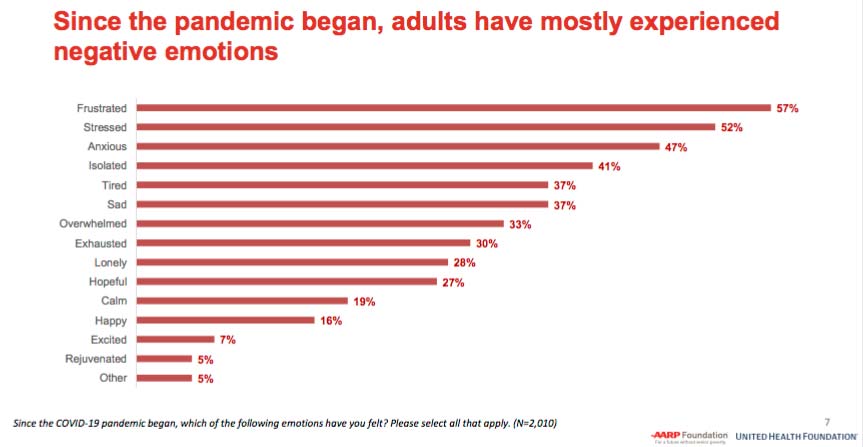
According to a report9,10 by the AARP and United Health Foundation, social distancing measures have led to an epidemic of loneliness, and this too has significant health and emotional risks. As noted in this report:11
“Defined as having few social relationships or infrequent social contact with others — social isolation is a public health crisis. Studies have found that social isolation can be worse for one's health than obesity, and the health risks of prolonged isolation are equivalent to smoking 15 cigarettes a day.12
For adults who have experienced social isolation during the current pandemic, half (50%) report this social isolation has caused them to lack motivation, slightly more than 4 in 10 (41%) say it has made them feel more anxious than usual and slightly more than a third (37%) report it has made them feel depressed.
Yet, only 11% of adults turned to a medical professional when feeling down or sad, and almost a third of adults 50+ reported that they did not look to anyone for support during the pandemic.
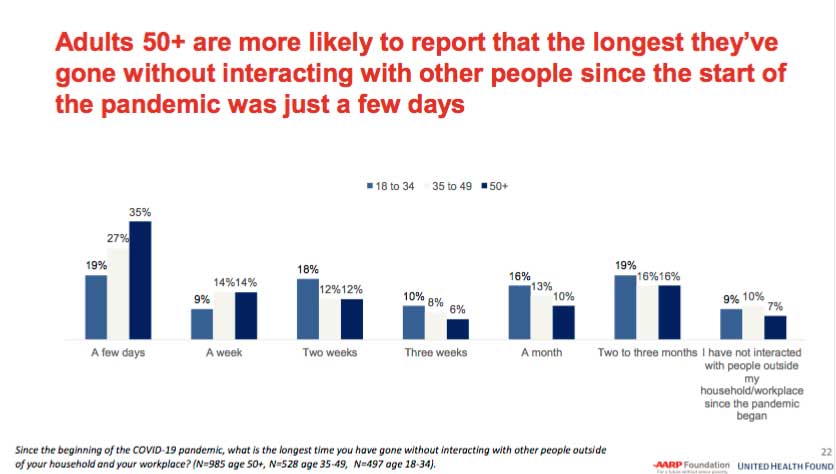
Among the 50+, almost a third of women (29%) report going as long as one to three months not interacting with others outside their home or workplace during the pandemic and are more likely to experience negative emotions than their male counterparts.
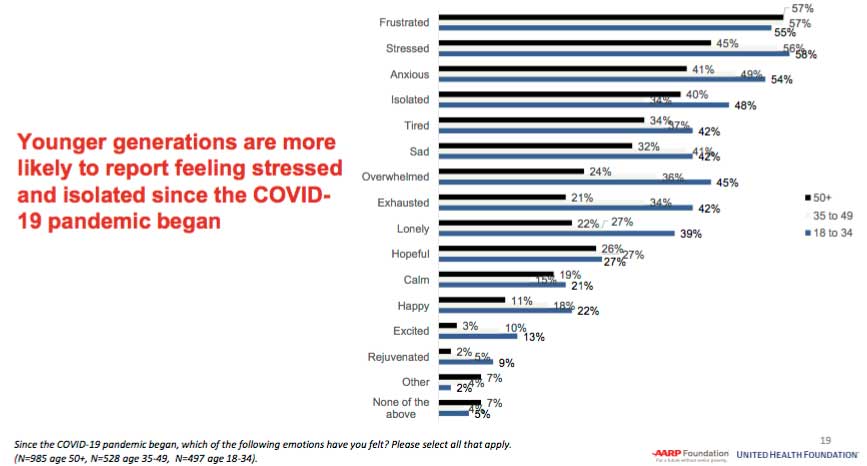
Since the COVID-19 pandemic began, women 50+ are more than twice as likely to report feeling overwhelmed (32% vs. 15% of men 50+), and more women than men 50+ report feeling anxious (46% vs. 36% of men 50+) and stressed (50% vs. 40% of men 50+).
Along with women 50+, the impact to low-income older adults (defined as those who have a household income less than $40K and are 50+) has also been greater compared to older adults with high incomes (defined as those who have a household income $75K+ and are 50+).
Four in 10 low-income adults 50+ report facing challenges accessing various resources during COVID-19, including a fifth who had challenges accessing food and a similar number who had challenges accessing healthcare services.”
No Life Without Human Connection
I wouldn’t be surprised if many people, regardless of their age, would choose companionship over safety from a virus. For argument’s sake, ponder this question.
Which would you choose: Live all alone on an island for the rest of your life, knowing there’s no one around to infect you with COVID-19, or live surrounded by friends and family, knowing you’re taking your chances every time you get near each other?
I know what I choose. As noted in the AARP’s report, “it’s connections, companionship, and a sense of belonging that we need as humans.” Social connection is even more impactful at earlier ages, with poor social connections being strongly associated with poor health and depression among youth.13
So, before you cancel holiday plans with aging parents and grandparents this season, make sure that’s what they really want. Remember, this may be their last Thanksgiving, or their last Christmas. How do you want to spend that time and what memories do you want to make?
Handing out edicts, demanding we eliminate all the things that make life worth living in order to prevent the spread of a survivable virus that most people don’t even know they have unless they get tested is unconscionable and inhuman. But so is following these kinds of unconstitutional government edicts.
I have to say I’m surprised at the sheer number of people willing to surrender their constitutional rights and liberties in return for absolutely nothing. None of the measures — 6-foot social distancing, mask wearing, self-isolation and select business shut-downs — actually guarantee anyone’s safety. All we need is one infected person left in the world, and safety for all remains out of reach.
The Loneliness Epidemic Deepens
Even before the COVID-19 pandemic, loneliness had reached epidemic levels. In 2018, 54% of American adults (age 18 and older) reported feeling lonely. By January 2020, it was 61%,14 and now, nine months into the pandemic, we’ve reached 66%.15
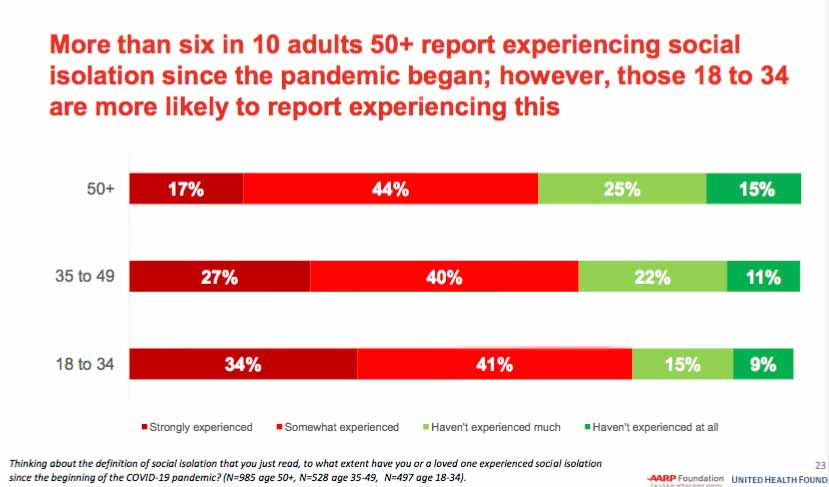
And loneliness isn’t relegated to the elderly. According to the AARP report, people between the ages of 18 and 34 actually report the highest rates of isolation.16 In the 18 to 34 age group, 75% report feeling socially isolated, compared to 61% of those over 50.
Among those aged 18 to 34, 19% say they’ve gone as long as two to three months without interacting with another person, compared to 16% among those over the age of 35. Ten percent of 35- to 49-year-olds, 9% of 18- to 34-year-olds and 7% of those over 50 say they’ve not interacted with anyone outside their household or workplace since the pandemic began!
The impact of loneliness and social isolation is significant, and will undoubtedly be found to be far greater than the death toll of COVID-19 by the time everything is tabulated.
According to a 2019 study17 by the American Cancer Society that looked at data from 580,182 Americans, social isolation increases mortality from every cause. In other words, social isolation is deadly. Commenting on her team’s findings, public health researcher Kassandra Alcaraz told the American Psychological Association:18
"Our research really shows that the magnitude of risk presented by social isolation is very similar in magnitude to that of obesity, smoking, lack of access to care and physical inactivity.”
Well-Known Effects of Solitary Confinement
While it’s been referred to as “self-isolation” and sold as “staying safe at home,” the lockdowns can rightfully be likened to house arrest, especially in areas where people have only been allowed outdoors for an hour or two a day.
That this kind of self-isolation can be harmful to mental health should come as no surprise, considering psychologists have long known the effects solitary confinement has on prisoners. Even among prisoners, solitary confinement is the worst and most extreme punishment there is. As reported by Endgadget:19
“Take Robert King for example, who spent 29 years in solitary confinement. King spoke at a 2018 neuroscience conference about his experience and how it impacted his cognitive function. He described that, upon his release from prison, he had severe difficulty recognizing faces and had to retrain himself to understand what faces even were and how they worked.
He also had difficulty navigating even simple routes through a city without assistance. Turns out that when your universe is a 6-foot by 9-foot room for nearly three decades, there's not much need to keep your navigation skills sharp — or even much impetus to keep a firm grasp of reality.
‘For some prisoners … solitary confinement precipitates a descent into madness,’ Dr. Craig Haney, professor of psychology at University of California, Santa Cruz, told the Senate Judiciary Subcommittee on the Constitution, Civil Rights and Human Rights in 2012.
Prisoners may experience crushing bouts of anxiety, paranoia, hallucinations, and panic attacks. ‘The conditions of confinement are far too severe to serve any kind of penological purpose,’ he concluded.
The reason this happens is because prolonged social isolation physically changes the shape and function of your brain. The hippocampus, the region responsible for learning and memory not only shrinks in size in response to long-term isolation, it loses its plasticity and may eventually shut down altogether.
At the same time the amygdala, which regulates your fear and anxiety response, goes into overdrive. And the longer the confinement lasts, the more pronounced these changes become — even after the inmate's eventual release."
Don’t Let a Virus Steal Your Life
Risk is an inevitable part of life, and for all of human history, mankind has accepted this. Now all of a sudden, we’re told we have to give up life in order to prevent the spread of a virus that poses no risk to the vast majority of people.
Is it worth it? Just how much are you willing to give up for this false sense of security? Are you willing to give up your family? Your friends? For how long? Are you willing to live in solitary confinement for the rest of your days? Because, believe me, the threat of infectious disease will never cease.
I believe the real threat right now is what we’re doing to sabotage the mental, emotional and physical health of people, especially our children, whose development is dependent on social interactions, physical contact and facial expressions. Between mask wearing and social distancing, I fear the impact on children in particular may be long-term, if not permanent.
But it’s clearly taking a cruel toll on the elderly as well, who are nearing the end of their lives anyway. If you knew your days were numbered, how would you want to spend them? Would your main concern be to prevent an infection that might speed up the inevitable, or would you want to spend whatever time you have left surrounded by those you love?
These are significant questions that will guide your choices and thus the course of your life, and they’re more pressing now than ever. So, choose wisely this holiday season, because whatever you choose, you’ll have to live with your choices.
“It seems gene editing is going to eliminate all disease,” said HBO’s John Oliver, “Or kill every last one of us.”1 He’s referring to gene-editing tools such as CRISPR, or Clustered Regularly Interspaced Short Palindromic Repeat, and TALEN (Transcription Activator-Like Effector Nuclease), which are being used for everything from disease treatment to agriculture.
Unbeknownst to many, CRISPR technology has already been used to tinker with crops, including both plants and animal farming. In addition to altering the taste of foods, CRISPR is being used to extend shelf life and create foods that resist certain bacteria and viruses.2
Even chicken — a staple food in diets around the world — has been eyed for gene editing due to avian leucosis virus, and a “CRISPR” chicken may be coming to your dinner plate soon.
Avian Leukosis Virus Widespread in CAFO Poultry
Avian leukosis virus (ALV) has been plaguing the CAFO (concentrated animal feeding operation) poultry industry since it was first identified in 1991.3 The disease causes tumors to develop in the birds, along with symptoms such as weakness, loss of appetite, diarrhea and depression.4
The last major ALV outbreak occurred in 2018 in China, leading to high mortality rates among infected chickens.5 However, the virus is present in CAFO chickens worldwide, leading to an estimated millions of pounds of losses annually.6
The U.S. Department of Agriculture (USDA) once required that chickens that show signs of ALV or “lesions” (tumors) must be removed from processing so they do not enter the food chain.7
However, the National Chicken Council petitioned the USDA’s Food Safety and Inspection Service in March 2019 asking to “treat lesions that could be suspected as being caused by avian leukosis as a trimmable condition and not a condition that requires whole bird condemnation.”8
July 16, 2020, FSIS accepted the petition, stating, “We have determined that current scientific evidence supports treating avian leukosis as a trimmable condition and that the actions requested in your petition would reduce regulatory burdens on the industry.”9
Despite the significant regulatory change — which means chickens riddled with tumors may still end up in the food supply as long as they’re “trimmed” — researchers have been looking toward gene editing as another way to eradicate ALV from CAFO poultry flocks.
Scientists Use CRISPR to Tackle Avian Leukosis
In 2018, researchers with the Czech Academy of Sciences determined that, because ALVs use specific receptor proteins to gain entry into cells, such receptors would make good targets for “biotechnological manipulation” in order to create poultry resistant to the virus, which they attempted using CRISPR-Cas 9.10
CRISPR gene-editing technology brought science fiction to life with its ability to cut and paste DNA fragments, potentially eliminating serious inherited diseases. CRISPR-Cas9, in particular, has gotten scientists excited because,11 by modifying an enzyme called Cas9, the gene-editing capabilities are significantly improved.
In their 2018 study, published in the journal Viruses, the scientists noted that “CRISPR/Cas9-mediated knock-out or the fine editing of ALV receptor genes might be the first step in the development of virus-resistant chickens.”12 In a separate study published in PNAS in January 2020, the researchers demonstrated that CRISPR-Cas9 was effective in rendering chickens resistant to the J subgroup of ALV. They noted:13
“We introduced a single amino acid deletion into the gene encoding the receptor that is required for avian leukosis virus subgroup J to infect chicken cells. Here, we demonstrate that this mutation confers the resistance of chickens to avian leukosis virus subgroup J, an important pathogen in poultry. In addition, we present highly efficient genome-editing technology in chicken.”
They added that no visible side effects were apparent after the process, which involved deleting tryptophan residue number 38 of chNHE1 (W38), a critical amino acid for virus entry. The word “visible” is key, however, as many unexpected changes may still occur that aren’t immediately recognizable, and it’s possible for those changes to be transferred to other organisms or generations.
In an interview with Yale Insights, Dr. Greg Licholai, a biotech entrepreneur and a lecturer at Yale, explained that this could even lead to problems that are worse than the “cure,” like antibiotic resistance or incurable diseases:14
“That’s probably the biggest fear of CRISPR. Humans manipulating the genetic code, and those manipulations get passed on generation to generation to generation.
We think we know what we’re doing, we think we’re measuring exactly what changes we’re doing to the genes, but there’s always the possibility that either we miss something or our technology can’t pick up on other changes that have been made that haven’t been directed by us.
And the fear then is that those changes lead to antibiotic resistance or other mutations that go out into the population and would be very difficult to control. Basically creating incurable diseases or other potential mutations that we wouldn’t really have control over.”
Gene-Edited Chickens Also Exist That Resist Flu
Influenza spreads rapidly among CAFO birds and has the potential to be transmitted to humans. The simplest way to stop the widespread transmission of bird flu would be to change the way chickens are raised, putting them outdoors on pasture as opposed to crowded in disease-ridden CAFOs.
Scientists, however, turned to biotechnology instead, using CRISPR to target part of the ANP32 gene, which codes for a protein that flu viruses depend on,15 in order to create flu-resistant chickens.16
Flu- and ALV-resistant chickens are just two examples of gene-editing technology at work. Researchers have also snipped out a section of pig DNA intended to prevent porcine reproductive and respiratory syndrome (PRRS) — a common and often fatal ailment among CAFO pigs.17 Such edits are permanent and passed down to other generations.
In another project, this one funded by the USDA, researchers have added the SRY gene to cattle, which results in female cows that turn into males, complete with larger muscles, a penis and testicles, but no ability to make sperm.18 Male (or male-like) cattle are more valuable to the beef industry because they get bigger, faster, allowing companies to make greater profits in less time.
Other biotech companies have taken to targeting genes intended to ease animal suffering, which they believe may soften regulators and consumers who are wary of the technology.19 One company snipped out the genes responsible for growing horns in dairy cows, for instance, which means they wouldn’t be subjected to the inhumane ways the horns are currently removed (with no pain relief).
As for gene-edited animals, the FDA proposed to classify animals with edited or engineered DNA as drugs,20 prompting backlash from the biotech industry,21 which doesn’t even want such foods labeled. This isn’t the case for gene-edited plants, however, which have largely escaped regulation.
Gene-Edited Mushrooms and Lax Regulations
A number of gene-edited plant foods have also been developed or proposed, including non-browning mushrooms, which were created by Yinong Yang, a plant pathologist at Pennsylvania State University, in 2016 using CRISPR-Cas9. Although the “frankenfungi,” as it’s been called, has never before existed in nature, it would require no USDA approval because it does not contain foreign DNA.
"Our genome-edited mushroom has small deletions in a specific gene but contains no foreign DNA integration in its genome," Yang said in Penn State’s Ag Science Magazine. "Therefore, we believed that there was no scientifically valid basis to conclude that the CRISPR-edited mushroom is a regulated article based on the definition described in the regulations."22
Weeks after the USDA notified Yang that the gene-edited non-browning mushrooms would not require approval, it also ruled that DuPont Pioneer’s CRISPR-Cas9-edited corn would also be able to bypass regulatory approval.23
The rule, known as the "Sustainable, Ecological, Consistent, Uniform, Responsible, Efficient" (SECURE) rule,24 was finalized in May 2020 and maintained the status that crops edited using CRISPR-Cas9 and other similar technologies would be non-regulated.25
Are You Already Eating Gene-Edited Soybean Oil?
A gene-edited soybean oil created by biotech company Calyxt was picked up by its first user — a Midwest company with both restaurant and foodservice locations, which is using it for frying as well as in dressings and sauces — in 2019.26 Calyxt’s soybean oil, Calyno,27 contains two inactivated genes, resulting in an oil with no trans fats, increased heart-healthy oleic acid and a longer shelf life.
As of February 2019, more than 100 farmers in the Midwest were reportedly growing Calyxt’s high-oleic soybeans on more than 34,000 acres.28 In an update released February 7, 2020, Calyxt stated it had contracted 100,000 soybean acres in the U.S. for 2020, which represented 178% growth from the year prior.29
It also received its first purchase order from a customer targeting four of its primary markets (foodservice, food ingredients, animal nutrition and industrial,) and is now offering 1-gallon jugs of its Calyno cooking oil directly to consumers.30
Calyxt has also developed a high-fiber wheat, which has been declared a non-regulated article and may launch as early as 2020 or 2021.31 In short, gene-edited foods are already on the market and expanding with fervor, while the health and environmental risks remain completely unknown.
Unexpected Consequences, Risks Uncovered
Gene-editing, for all of its intended precision, isn’t an exact science. In animals, gene editing has led to unexpected side effects, including enlarged tongues and extra vertebrate.32,33
Further, when researchers at the U.K.’s Wellcome Sanger Institute systematically studied mutations from CRISPR-Cas9 in mouse and human cells, large genetic rearrangements were observed, including DNA deletions and insertions, near the target site. The DNA deletions could end up activating genes that should stay “off,” such as cancer-causing genes, as well as silencing those that should be “on.”34
Without a label requirement, there’s no way for consumers to know whether they’re eating gene edited soybean oil — or one of the many future gene edited products likely to hit the market, like “CRISPR chicken.” For now, however, gene-edited foods cannot be labeled organic, which is one more reason why seeking out organic and, even better, biodynamic foods, is so important.
According to a study that examined how informed consent is given to COVID-19 vaccine trial participants, disclosure forms fail to inform volunteers that the vaccine might make them susceptible to more severe disease if they’re exposed to the virus.
The study,1 “Informed Consent Disclosure to Vaccine Trial Subjects of Risk of COVID-19 Vaccine Worsening Clinical Disease,” published in the International Journal of Clinical Practice, October 28, 2020, points out that “COVID-19 vaccines designed to elicit neutralizing antibodies may sensitize vaccine recipients to more severe disease than if they were not vaccinated.”
“Vaccines for SARS, MERS and RSV have never been approved, and the data generated in the development and testing of these vaccines suggest a serious mechanistic concern: that vaccines designed empirically using the traditional approach (consisting of the unmodified or minimally modified coronavirus viral spike to elicit neutralizing antibodies), be they composed of protein, viral vector, DNA or RNA and irrespective of delivery method, may worsen COVID-19 disease via antibody-dependent enhancement (ADE),” the paper states.
“This risk is sufficiently obscured in clinical trial protocols and consent forms for ongoing COVID-19 vaccine trials that adequate patient comprehension of this risk is unlikely to occur, obviating truly informed consent by subjects in these trials.
The specific and significant COVID-19 risk of ADE should have been and should be prominently and independently disclosed to research subjects currently in vaccine trials, as well as those being recruited for the trials and future patients after vaccine approval, in order to meet the medical ethics standard of patient comprehension for informed consent.”
What Is Antibody-Dependent Enhancement?
As noted by the authors of that International Journal of Clinical Practice paper, previous coronavirus vaccine efforts — for severe acute respiratory syndrome coronavirus (SARS-CoV), Middle East respiratory syndrome coronavirus (MERS-CoV) and respiratory syncytial virus (RSV) — have revealed a serious concern: The vaccines have a tendency to trigger antibody-dependent enhancement.
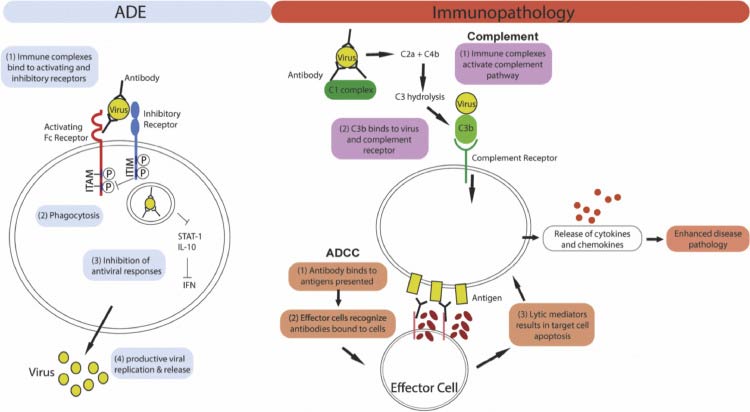
What exactly does that mean? In a nutshell, it means that rather than enhance your immunity against the infection, the vaccine actually enhances the virus’ ability to enter and infect your cells, resulting in more severe disease than had you not been vaccinated.2
This is the exact opposite of what a vaccine is supposed to do, and a significant problem that has been pointed out from the very beginning of this push for a COVID-19 vaccine. The 2003 review paper “Antibody-Dependent Enhancement of Virus Infection and Disease” explains it this way:3
“In general, virus-specific antibodies are considered antiviral and play an important role in the control of virus infections in a number of ways. However, in some instances, the presence of specific antibodies can be beneficial to the virus. This activity is known as antibody-dependent enhancement (ADE) of virus infection.
The ADE of virus infection is a phenomenon in which virus-specific antibodies enhance the entry of virus, and in some cases the replication of virus, into monocytes/macrophages and granulocytic cells through interaction with Fc and/or complement receptors.
This phenomenon has been reported in vitro and in vivo for viruses representing numerous families and genera of public health and veterinary importance. These viruses share some common features such as preferential replication in macrophages, ability to establish persistence, and antigenic diversity. For some viruses, ADE of infection has become a great concern to disease control by vaccination.”
Previous Coronavirus Vaccine Efforts Have All Failed
In my May 2020 interview above with Robert Kennedy Jr., he summarized the history of coronavirus vaccine development, which began in 2002, following three consecutive SARS outbreaks. By 2012, Chinese, American and European scientists were working on SARS vaccine development, and had about 30 promising candidates.
Of those, the four best vaccine candidates were then given to ferrets, which are the closest analogue to human lung infections. In the video below, which is a select outtake from my full interview, Kennedy explains what happened next. While the ferrets displayed robust antibody response, which is the metric used for vaccine licensing, once they were challenged with the wild virus, they all became severely ill and died.
The same thing happened when they tried to develop an RSV vaccine in the 1960s. RSV is an upper respiratory illness that is very similar to that caused by coronaviruses. At that time, they had decided to skip animal trials and go directly to human trials.
“They tested it on I think about 35 children, and the same thing happened,” Kennedy said. “The children developed a champion antibody response — robust, durable. It looked perfect [but when] the children were exposed to the wild virus, they all became sick. Two of them died. They abandoned the vaccine. It was a big embarrassment to FDA and NIH.”
Neutralizing Versus Binding Antibodies
Coronaviruses produce not just one but two different types of antibodies:
Neutralizing antibodies,4 also referred to as immoglobulin G (IgG) antibodies, that fight the infection
Binding antibodies5 (also known as nonneutralizing antibodies) that cannot prevent viral infection
Instead of preventing viral infection, binding antibodies trigger an abnormal immune response known as “paradoxical immune enhancement.” Another way to look at this is your immune system is actually backfiring and not functioning to protect you but actually making you worse.
Many of the COVID-19 vaccines currently in the running are using mRNA to instruct your cells to make the SARS-CoV-2 spike protein (S protein). The spike protein, which is what attaches to the ACE2 receptor of the cell, is the first stage of the two-stage process viruses use to gain entry into cells.
The idea is that by creating the SARS-CoV-2 spike protein, your immune system will commence production of antibodies, without making you sick in the process. The key question is, which of the two types of antibodies are being produced through this process?
Without Neutralizing Antibodies, Expect More Severe Illness
In an April 2020 Twitter thread,6 The Immunologist noted: “While developing vaccines … and considering immunity passports, we must first understand the complex role of antibodies in SARS, MERS and COVID-19.” He goes on to list several coronavirus vaccine studies that have raised concerns about ADE.
The first is a 2017 study7 in PLOS Pathogens, ”Enhanced Inflammation in New Zealand White Rabbits When MERS-CoV Reinfection Occurs in the Absence of Neutralizing Antibody,” which investigated whether getting infected with MERS would protect the subject against reinfection, as is typically the case with many viral illnesses. (Meaning, once you recover from a viral infection, say measles, you’re immune and won’t contract the illness again.)
To determine how MERS affects the immune system, the researchers infected white rabbits with the virus. The rabbits got sick and developed antibodies, but those antibodies were not the neutralizing kind, meaning the kind of antibodies that block infection. As a result, they were not protected from reinfection, and when exposed to MERS for a second time, they became ill again, and more severely so.
“In fact, reinfection resulted in enhanced pulmonary inflammation, without an associated increase in viral RNA titers,” the authors noted. Interestingly, neutralizing antibodies were elicited during this second infection, preventing the animals from being infected a third time. According to the authors:
“Our data from the rabbit model suggests that people exposed to MERS-CoV who fail to develop a neutralizing antibody response, or persons whose neutralizing antibody titers have waned, may be at risk for severe lung disease on re-exposure to MERS-CoV.”
In other words, if the vaccine does not result in a robust response in neutralizing antibodies, you might be at risk for more severe lung disease if you’re infected with the virus.
And here’s an important point: COVID-19 vaccines are NOT designed to prevent infection. As detailed in “How COVID-19 Vaccine Trials Are Rigged,” a “successful” vaccine merely needs to reduce the severity of the symptoms. They’re not even looking at reducing infection, hospitalization or death rates.
ADE in Dengue Infections
The Dengue virus is also known to cause ADE. As explained in a Swiss Medical Weekly paper published in April 2020:8
“The pathogenesis of COVID-19 is currently believed to proceed via both directly cytotoxic and immune-mediated mechanisms. An additional mechanism facilitating viral cell entry and subsequent damage may involve the so-called antibody-dependent enhancement (ADE).
ADE is a very well-known cascade of events whereby viruses may infect susceptible cells via interaction between virions complexed with antibodies or complement components and, respectively, Fc or complement receptors, leading to the amplification of their replication.
This phenomenon is of enormous relevance not only for the understanding of viral pathogenesis, but also for developing antiviral strategies, notably vaccines …
There are four serotypes of Dengue virus, all eliciting protective immunity. However, although homotypic protection is long-lasting, cross-neutralizing antibodies against different serotypes are short-lived and may last only up to 2 years.
In Dengue fever, reinfection with a different serotype runs a more severe course when the protective antibody titer wanes. Here, non-neutralizing antibodies take over neutralizing ones, bind to Dengue virions, and these complexes mediate the infection of phagocytic cells via interaction with the Fc receptor, in a typical ADE.
In other words, heterotypic antibodies at subneutralizing titres account for ADE in persons infected with a serotype of Dengue virus that is different from the first infection.
Cross-reactive neutralizing antibodies are associated with decreased odds of symptomatic secondary infection, and the higher the titer of such antibodies following the primary infection, the longer the delay to symptomatic secondary infection …”
The paper goes on to detail results from follow-up investigations into the Dengue vaccine, which revealed the hospitalization rate for Dengue among vaccinated children under the age of 9 was greater than the rate among controls. The explanation for this appears to be that the vaccine mimicked a primary infection, and as that immunity waned, the children became susceptible to ADE when they encountered the virus a second time. The author explains:
“A post hoc analysis of efficacy trials, using an anti-nonstructural protein 1 immunoglobulin G (IgG) enzyme-linked immunosorbent assay (ELISA) to distinguish antibodies elicited by wild-type infection from those following vaccination, showed that the vaccine was able to protect against severe Dengue [in] those who had been exposed to the natural infection before vaccination, and that the risk of severe clinical outcome was increased among seronegative persons.
Based on this, a Strategic Advisor Group of Experts convened by World Health Organization (WHO) concluded that only Dengue seropositive persons should be vaccinated whenever Dengue control programs are planned that include vaccination.”
ADE in Coronavirus Infections
This could end up being important for the COVID-19 vaccine. Hypothetically speaking, if SARS-CoV-2 works like Dengue, which is also caused by an RNA virus, then anyone who has not tested positive for SARS-CoV-2 might actually be at increased risk for severe COVID-19 after vaccination, and only those who have already recovered from a bout of COVID-19 would be protected against severe illness by the vaccine.
To be clear, we do not know whether that is the case or not, but these are important areas of inquiry and the current vaccine trials will simply not be able to answer this important question.
The Swiss Medical Weekly paper9 also reviews the evidence of ADE in coronavirus infections, citing research showing inoculating cats against the feline infectious peritonitis virus (FIPV) — a feline coronavirus — increases the severity of the disease when challenged with the same FIPV serotype as that in the vaccine.
The paper also cites research showing “Antibodies elicited by a SARS-CoV vaccine enhanced infection of B cell lines in spite of protective responses in the hamster model.” Another paper,10 “Antibody-Dependent SARS Coronavirus Infection Is Mediated by Antibodies Against Spike Proteins,” published in 2014, found that:
“… higher concentrations of anti-sera against SARS-CoV neutralized SARS-CoV infection, while highly diluted anti-sera significantly increased SARS-CoV infection and induced higher levels of apoptosis.
Results from infectivity assays indicate that SARS-CoV ADE is primarily mediated by diluted antibodies against envelope spike proteins rather than nucleocapsid proteins. We also generated monoclonal antibodies against SARS-CoV spike proteins and observed that most of them promoted SARS-CoV infection.
Combined, our results suggest that antibodies against SARS-CoV spike proteins may trigger ADE effects. The data raise new questions regarding a potential SARS-CoV vaccine …”
A study11 that ties into this was published in the journal JCI Insight in 2019. Here, macaques vaccinated with a modified vaccinia Ankara (MVA) virus encoding full-length SARS-CoV spike protein ended up with more severe lung pathology when the animals were exposed to the SARS virus. And, when they transferred anti-spike IgG antibodies into unvaccinated macaques, they developed acute diffuse alveolar damage, likely by “skewing the inflammation-resolving response.”
SARS Vaccine Worsens Infection After Challenge With SARS-CoV
An interesting 2012 paper12 with the telling title, “Immunization with SARS Coronavirus Vaccines Leads to Pulmonary Immunopathology on Challenge with the SARS Virus,” demonstrates what many researchers now fear, namely that COVID-19 vaccines may end up making people more prone to severe SARS-CoV-2 infection.
The paper reviews experiments showing immunization with a variety of SARS vaccines resulted in pulmonary immunophathology once challenged with the SARS virus. As noted by the authors:13
“Inactivated whole virus vaccines whether inactivated with formalin or beta propiolactone and whether given with our without alum adjuvant exhibited a Th2-type immunopathologic in lungs after challenge.
As indicated, two reports attributed the immunopathology to presence of the N protein in the vaccine; however, we found the same immunopathologic reaction in animals given S protein vaccine only, although it appeared to be of lesser intensity.
Thus, a Th2-type immunopathologic reaction on challenge of vaccinated animals has occurred in three of four animal models (not in hamsters) including two different inbred mouse strains with four different types of SARS-CoV vaccines with and without alum adjuvant. An inactivated vaccine preparation that does not induce this result in mice, ferrets and nonhuman primates has not been reported.
This combined experience provides concern for trials with SARS-CoV vaccines in humans. Clinical trials with SARS coronavirus vaccines have been conducted and reported to induce antibody responses and to be ‘safe.’ However, the evidence for safety is for a short period of observation.
The concern arising from the present report is for an immunopathologic reaction occurring among vaccinated individuals on exposure to infectious SARS-CoV, the basis for developing a vaccine for SARS. Additional safety concerns relate to effectiveness and safety against antigenic variants of SARS-CoV and for safety of vaccinated persons exposed to other coronaviruses, particularly those of the type 2 group.”
The Elderly Are Most Vulnerable to ADE
On top of all of these concerns, there’s evidence showing the elderly — who are most vulnerable to severe COVID-19 — are also the most vulnerable to ADE. Preliminary research findings14 posted on the preprint server medRxiv at the end of March 2020 reported that middle-aged and elderly COVID-19 patients have far higher levels of anti-spike antibodies — which, again, increase infectivity — than younger patients.
Immune Enhancement Is a Serious Concern
Another paper worth mentioning is the May 2020 mini review15 “Impact of Immune Enhancement on COVID-19 Polyclonal Hyperimmune Globulin Therapy and Vaccine Development.” As in many other papers, the authors point out that:16
“While development of both hyperimmune globulin therapy and vaccine against SARS-CoV-2 are promising, they both pose a common theoretical safety concern. Experimental studies have suggested the possibility of immune-enhanced disease of SARS-CoV and MERS-CoV infections, which may thus similarly occur with SARS-CoV-2 infection …
Immune enhancement of disease can theoretically occur in two ways. Firstly, non-neutralizing or sub-neutralizing levels of antibodies can enhance SARS-CoV-2 infection into target cells.
Secondly, antibodies could enhance inflammation and hence severity of pulmonary disease. An overview of these antibody dependent infection and immunopathology enhancement effects are summarized in Fig. 1 …
Currently, there are multiple SARS-CoV and MERS-CoV vaccine candidates in pre-clinical or early phase clinical trials. Animal studies on these CoVs have shown that the spike (S) protein-based vaccines (specifically the receptor binding domain, RBD) are highly immunogenic and protective against wild-type CoV challenge.
Vaccines that target other parts of the virus, such as the nucleocapsid, without the S protein, have shown no protection against CoV infection and increased lung pathology. However, immunization with some S protein based CoV vaccines have also displayed signs of enhanced lung pathology following challenge.
Hence, besides the choice of antigen target, vaccine efficacy and risk of immunopathology may be dependent on other ancillary factors, including adjuvant formulation, age at vaccination … and route of immunization.”
Figure 1: Mechanism of ADE and antibody mediated immunopathology. Left panel: For ADE, immune complex internalization is mediated by the engagement of activating Fc receptors on the cell surface. Co-ligation of inhibitory receptors then results in the inhibition of antiviral responses which leads to increased viral replication. Right panel: Antibodies can cause immunopathology by activating the complement pathway or antibody-dependent cellular cytotoxicity (ADCC). For both pathways, excessive immune activation results in the release of cytokines and chemokines, leading to enhanced disease pathology.
Do a Risk-Benefit Analysis Before Making Up Your Mind
In all likelihood, regardless of how effective (or ineffective) the COVID-19 vaccines end up being, they’ll be released to the public in relatively short order. Most predict one or more vaccines will be ready sometime in 2021.
Ironically, the data17,18,19 we now have no longer support a mass vaccination mandate, considering the lethality of COVID-19 is lower than the flu for those under the age of 60.20 If you’re under the age of 40, your risk of dying from COVID-19 is just 0.01%, meaning you have a 99.99% chance of surviving the infection. And you could improve that to 99.999% if you’re metabolically flexible and vitamin D replete.
So, really, what are we protecting against with a COVID-19 vaccine? As mentioned, the vaccines aren’t even designed to prevent infection, only reduce the severity of symptoms. Meanwhile, they could potentially make you sicker once you’re exposed to the virus. That seems like a lot of risk for a truly questionable benefit.
To circle back to where we started, participants in current COVID-19 vaccine trials are not being told of this risk — that by getting the vaccine they may end up with more severe COVID-19 once they’re infected with the virus.
Lethal Th2 Immunopathology Is Another Potential Risk
In closing, consider what this PNAS news feature states about the risk of vaccine-induced immune enhancement and dysfunction, particularly for the elderly, the very people who would need the protection a vaccine might offer the most:21
“Since the 1960s, tests of vaccine candidates for diseases such as dengue, respiratory syncytial virus (RSV), and severe acute respiratory syndrome (SARS) have shown a paradoxical phenomenon:
Some animals or people who received the vaccine and were later exposed to the virus developed more severe disease than those who had not been vaccinated. The vaccine-primed immune system, in certain cases, seemed to launch a shoddy response to the natural infection …
This immune backfiring, or so-called immune enhancement, may manifest in different ways such as antibody-dependent enhancement (ADE), a process in which a virus leverages antibodies to aid infection; or cell-based enhancement, a category that includes allergic inflammation caused by Th2 immunopathology. In some cases, the enhancement processes might overlap …
Some researchers argue that although ADE has received the most attention to date, it is less likely than the other immune enhancement pathways to cause a dysregulated response to COVID-19, given what is known about the epidemiology of the virus and its behavior in the human body.
‘There is the potential for ADE, but the bigger problem is probably Th2 immunopathology,’ says Ralph Baric, an epidemiologist and expert in coronaviruses … at the University of North Carolina at Chapel Hill.
In previous studies of SARS, aged mice were found to have particularly high risks of life-threatening Th2 immunopathology ... in which a faulty T cell response triggers allergic inflammation, and poorly functional antibodies that form immune complexes, activating the complement system and potentially damaging the airways.”